 (1 votes, average: 5.00 out of 5)
 Loading...
Fullscreen





![Hello Kitty [HORROR]](https://gamefyno.com/wp-content/uploads/2025/03/hello-kitty-horror-1.jpg "Hello Kitty [HORROR]")
 (1 votes, average: 5.00 out of 5)Loading...
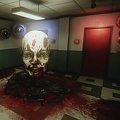
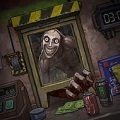
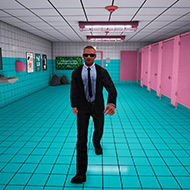
 Twisted Tower looks like a carnival horror aesthetic exercise — bright colors, corrupted mascots, a 1950s resort gone wrong — but plays like a first-person shooter that demands spatial awareness, ammo discipline, and consistent use of every mobility tool available. Vincent enters Mr. Twister’s televised competition to find Charlotte and survive five floors of the most mechanically dense amusement-nightmare in recent indie FPS releases. The Whack-a-Mole Mallet is your first weapon. That is not a joke. The game is serious about what it is.
| Genre | First-person horror shooter / platformer |
| Levels | 5 (Hotel, Waterpark, Clown Casino, Carnival Forest, Space Station) |
| Publisher | 3D Realms |
| Setting | Abandoned 1950s resort / amusement park |
Twisted Tower hands out weapons gradually, and knowing which one to use against which enemy type matters more than raw aim. The Rubber-Band Pistol is the dependable sidearm — accurate, efficient against weak points, and reliable when ammo for everything else runs low. The Dart-Throwing Tommy Gun handles crowd situations but burns through supplies fast enough that players who fire it freely run dry before reaching a floor’s midpoint. Later weapons — the Farting Shotgun, the Skull-Popping Ray Gun, the chain-gun — are specialized enough that carrying the wrong one into a boss arena causes real problems.
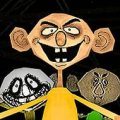
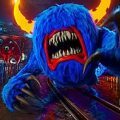
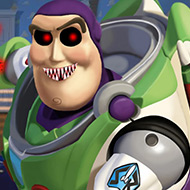
Combat is free-aim rather than lock-on, and the camera has a slight squirrelly quality that the community notes immediately. It never becomes a game-breaker, but players coming from lock-on-heavy action games feel it in the early Hotel section before they calibrate to the movement. What compensates is pace: enemies attack in readable numbers, ammo and health pickups from vending machines appear at sensible intervals, and Twisted Tower rarely feels like it is withholding resources to manufacture difficulty. The mascot enemies are corrupted versions of the park’s original characters, and each floor’s variety of enemies reflects the zone’s theme well enough that fighting a Waterpark enemy versus a Clown Casino enemy feels genuinely different.
The Whack-a-Mallet is worth mentioning specifically because new players dismiss it the moment anything more glamorous appears. Experienced players keep it active through the Hotel and use it to conserve pistol ammo on weakened enemies. The ammo economy early in the game rewards patience over firepower, and the Mallet is a significant part of that economy. Players who swap it away immediately regret the decision by the second combat arena on floor two.
Twisted Tower gives Vincent a grappling hook, and it arrives early enough that players who don’t incorporate it into combat movement are making things unnecessarily hard. A double jump into a mid-air dash followed by a grapple pull covers enough distance to remove Vincent from bad positions before damage lands. The game teaches this sequence implicitly — certain platforming sections only flow naturally when you combine all three inputs — but it never forces the combination in a tutorial space. Players who learned movement mechanics in isolation from each other are the ones who struggle in the Carnival Forest, where the elevation changes are dramatic enough that ground-level fighting becomes a significant disadvantage.
Some levels in Twisted Tower allow — and in certain puzzles require — flipping a switch to rotate the room upside down. This is the mechanic that most reliably divides players in community discussions. When it works as a traversal tool, revealing hidden passages and reframing enemy positions, it is clever design. When it appears as a mandatory puzzle gate on a tighter timer, some players find it disorienting in a way that stops feeling intentional. The Clown Casino section generates the most debate on this point. Mr. Twister’s announcements over the intercom during these segments add context, but they don’t resolve the disagreement about whether the camera orientation holds up under pressure.
Collectibles and secret areas are hidden throughout all five floors, and the nonlinear structure of some sections means a single run will not reveal everything. Players who explore the Hotel carefully before triggering the next area gate consistently find items that make the Waterpark more manageable. This is one of those design choices that pays off only if you recognize it early and adjust exploration habits accordingly — something completionist players pick up immediately but combat-focused players often miss until a second playthrough.
Mr. Twister is the voice the game leans on most heavily between combat sections. His announcements frame each floor as a televised spectacle and provide most of the context for what the resort was before it became a ruin. Charlotte’s presence across the tower is communicated through audio logs and environmental details rather than direct contact, which is a deliberate pacing choice that works better in the Hotel and Waterpark sections — where her absence creates dread — than in the final levels, where some players felt the payoff needed more weight.
The story framing has been called familiar, and fairly. Vincent climbing to rescue Charlotte from a theatrically villainous captor is a setup with a long history, and Twisted Tower is aware enough of that to deliver a couple of twists that recontextualize the competition. Whether those twists land depends largely on how much the player engaged with the audio logs and environmental storytelling in earlier floors. Players who rushed combat to reach the ending found them surprising. Players who read the tower’s history found them earned. That split in reception shows up consistently in community discussions of the ending.
Charlotte and Mr. Twister both get significant screen time and voice performance, and both are written with enough specificity that their dynamic lifts the story above its premise. This is the area Twisted Tower gets credit for even from players who found the camera or free-aim challenging — the world feels inhabited in a way that pure atmosphere games often sacrifice for mood.
Secret areas in Twisted Tower are primarily accessed by exploring before triggering the next narrative gate on each floor. In the Hotel, this means checking rooms off the main corridor before any Mr. Twister announcement moves the sequence forward. The room-rotation mechanic also reveals passages that are invisible from normal orientation — several hidden collectibles in the Clown Casino are only reachable after flipping the room. Audio logs scattered near secret entrances frequently hint at what they contain.
The Skull-Popping Ray Gun performs well against the Carnival Forest boss because the boss fight is built around targeting specific weak points at range rather than crowd-control saturation. The Dart-Throwing Tommy Gun can finish the fight, but at a cost that leaves players underequipped for the Space Station section immediately following. The Rubber-Band Pistol remains useful for preserving Ray Gun ammo between weak-point phases.
Twisted Tower has a primary ending and variants that depend on choices made during specific narrative moments with Mr. Twister and on whether the player collected key audio logs across the Hotel and Waterpark floors. The ending that requires all major audio logs provides the most complete version of Charlotte’s arc and recontextualizes several of Mr. Twister’s earlier announcements. Missing audio logs doesn’t lock the game — it locks context that makes the final scenes land differently.
Twisted Tower earns its place in the first-person horror space not by being the most frightening game in the genre but by making the Carnival Forest, the Clown Casino, and every corrupted mascot encounter feel like parts of a coherent world Vincent is genuinely fighting through. The moment you realize the Mallet has been quietly saving you ammo the entire time — and that Mr. Twister was narrating your near-death the whole way — is the moment the game becomes something more than its inspirations.
There are no reviews yet. Be the first one to write one.
 Optimized by Seraphinite Accelerator