 (No Ratings Yet)
 Loading...
Fullscreen












![Hello Kitty [HORROR]](https://gamefyno.com/wp-content/uploads/2025/03/hello-kitty-horror-1.jpg "Hello Kitty [HORROR]")
 (No Ratings Yet)Loading...
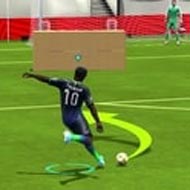
 You line up behind the ball, tap the run key, and the moment stretches out just long enough to pick a corner before you shoot. That small window of decision-making is the whole appeal of FIFA Soccer 2026, a browser arcade match that strips the sport down to movement, timing, and one strike that either finds the net or sails over the bar.
The setup stays simple on purpose. Two sides take the pitch, the clock runs across two halves, and there’s no league table hanging over any of it — just a ball, an open goal, and a defender closing you down before you get a clean shot away. Controls boil down to directional movement plus one action key for passing, shooting, and tackling, so the learning curve in this game is mostly about timing.
Most new players make the same mistake in their first few matches: they treat the shoot button like a reflex instead of a decision. Mash it from outside the box and the ball rockets over the bar more often than not. Players just looking for a quick match between other tabs tend to rush every attack this way. The pitch rewards patience instead — closing the distance, squaring up the goalkeeper, and only then committing to the strike.
The basic toolkit is short enough to learn in one match:
Once those habits click, scoring stops feeling random and starts looking like a short sequence instead:
The keeper AI is the most argued-about part of the whole game — sharp enough to punish a rushed angle, but a soft, rolled effort occasionally squirts under a dive that should have stopped it, the exact inconsistency players bring up when comparing notes on the near-post trick.
Players chasing a clean sheet tend to sit deeper and time tackles rather than chase the ball. That patient approach works early, but the gap shows once matches speed up: defenders close faster and a pass safe in the opening minutes gets intercepted a half-second later.
By the second half, sloppy first-touch passing gets punished almost every time. Players who treat it as a two-touch passing drill, moving the ball ahead of pressure instead of holding it, keep possession longest — the technique most beginners miss.
That pressure is also why matches feel harder as they go on: the defense closes the exact gaps a new player leaned on for early goals, forcing a second pass instead of one clean run at goal.
None of it needs a manual. FIFA Soccer plays best as a short match finished in one sitting, and the near-post finish stays the most reliable trick in the book long after everything else about the pitch has stopped feeling new.

There are no reviews yet. Be the first one to write one.
 Optimized by Seraphinite Accelerator