
 (2 votes, average: 4.50 out of 5)
 Loading...
Fullscreen











![Hello Kitty [HORROR]](https://gamefyno.com/wp-content/uploads/2025/03/hello-kitty-horror-1.jpg "Hello Kitty [HORROR]")
 (2 votes, average: 4.50 out of 5)Loading...
 On the surface, To Eat a God reads like an ordinary otome-adjacent visual novel: choose a route, win over an attractive deity, let the story carry you along. Underneath that surface it behaves more like a survival game in disguise, one where every response you type is being silently scored, and a single misjudged line can get your save file wiped by the same character you were trying to win over.
Your character is a puppet delivered into the Garden as an offering, and the real pressure in To Eat a God comes from what the community nicknamed OOC detection — a built-in mechanic where the resident gods pick up on dialogue that no longer sounds like something a puppet ought to say. Come across as too self-aware, too witty, too human, and the narrative doesn’t read it as charm — it reads it as danger. That’s the fundamental twist separating this visual novel from most others in its genre: success isn’t about clicking the objectively correct line, it’s about sustaining a convincing act across an entire route.
A lot of first-time players get this backwards. They open conversations the way they might in any other romance-driven title, showing off confidence and sharp wit, and get penalized for it because staying in character here means leaning toward restraint and obedience instead. Once that clicks — once you realize the Garden is scoring your act rather than just your choices — the routes start to feel far more navigable.
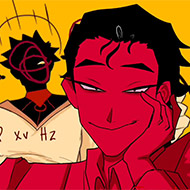
Each of the three available gods interprets the puppet differently. Unum radiates a warmth that’s genuinely dangerous, the sort of brightness that can scorch anyone who gets too relaxed around it. Septem plays more like a guardian who insists on total control — over the Garden and over the puppet living inside it — which turns his storyline into something closer to a power struggle than a courtship. Nulla is bound up with absence and an unsettling kind of forbidden insight, and reaching him requires triggering a hidden dialogue beat first; players frequently single him out as the god who exposes the game’s meta layer most sharply.
Most players arrive at Nulla’s route only after already losing at least one save to a god who judged the puppet as having blown its cover — an outcome the fanbase has come to treat almost like an initiation rather than something to dread.
Governing the Garden are seven Symbols, each carrying its own worldview that shapes how the environment reacts to the puppet’s presence. Whether being devoured is truly the puppet’s only possible fate is the question threading through the full 80,000-word script and its fifteen-plus endings. A handful of those endings genuinely reward skillful play; others function purely as cautionary tales, illustrating what happens when a puppet plays its part so convincingly that it loses whatever advantage it once had.
That inversion — a puppet clever enough to consume the god instead of being consumed — is what keeps route-mapping communities active long after a first ending screen. Debates over whether Unum or Septem is the tougher read pop up constantly, and that disagreement alone keeps forums and Discord servers busy for months after launch.
A specific earlier dialogue exchange has to be triggered before Nulla even becomes selectable, which explains why plenty of players clear Unum’s or Septem’s storyline first without ever noticing a fourth path was waiting.
It functions as a deliberate story beat rather than a technical error — the god has concluded your puppet’s act broke down, and this kind of progress loss is a documented and intentional piece of the design, not an accident.
Only some of them. A portion of the fifteen-plus endings do reward careful, patient play, but others are built as warnings, so don’t expect every closing screen to land as a victory even after a long and cautious route.
The romance dressing on To Eat a God isn’t really what keeps people hooked — it’s the lingering, low-level unease that Septem, Unum, or Nulla is testing you in a scene that looked completely ordinary. Between the seven Symbols shaping the Garden and the genuine risk of losing a save file outright, this visual novel bends a familiar format into something closer to a psychological endurance test, one that keeps drawing players back to see whether their puppet can finally get the better of the gods watching it.

There are no reviews yet. Be the first one to write one.
 Optimized by Seraphinite Accelerator