


 (No Ratings Yet)
 Loading...
Fullscreen

















 (No Ratings Yet)Loading...
In Never Made It Home you start with a finished night shift, an empty office, and a quiet street between you and your front door, which matters because nothing urgent is pushing you forward. The tickets are done, the work is behind you, and the only task left is walking home. Everything that follows grows out of how little the game gives you to do.
| Genre | First-person psychological horror |
| Setting | A late night shift in an empty office, then a walk home |
| Length | Short |
| Style | Walking simulator with narrative and mystery |
| Platforms | Windows, Linux and Android |
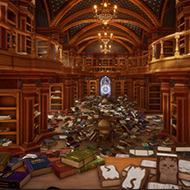
The office is where the mood is set. You are the last person there, the tickets are finished, and the building has the hollow quality of a place that was crowded a few hours earlier. Exploring it is slow, quiet work, and the silence does more of the scaring than any scripted event. If you have ever stayed late at work and noticed how loud a hallway becomes when nobody is in it, you already know what this section is going for.
The story follows a woman who has just finished the night shift alone, and every small detail is built to make her feel exposed.
Players who enjoy environmental storytelling will spend longer here than the pacing suggests, reading the room for clues. Mystery and narrative tags sit next to the horror tag on the page for a reason: the office is where the questions start, even before anyone follows you.
Leaving the building changes the rules. The street is quiet, the route is familiar, and the story makes clear that someone is following you. The fear is built on the gap between a routine walk and the knowledge that you are not alone on it.
Those three ideas describe what the page promises, and they explain why the walk home feels different from a chase sequence. As a walking simulator, the game rewards patience and attention over reflexes.
Horror fans used to being hunted through corridors should adjust expectations early. The pressure here comes from knowing whoever is behind you is there, not from being forced to run.
The main argument is the one that follows every walking simulator: some players love the slow dread, and others want something to fight, solve or run from. Never Made It Home is short, and short horror lives or dies on whether the mood lands in the first few minutes. If the quiet office does not unsettle you, the rest will feel thin.
There is also the matter of how much the game explains. Story-rich horror can leave questions open on purpose, and players who prefer a clear answer by the end sometimes read that as unfinished. Others see it as the point.
A real strength is how the walk home mirrors a fear many people share, the feeling of being followed on an ordinary street late at night. That specificity separates it from generic haunted-house horror, and the Filipino tag on the page points to a particular setting.
It is a short game built for a single sitting, a night shift and a walk home rather than a long campaign. Exact playtime depends on how long you linger in the empty office and how carefully you read the details, but nobody should expect a multi-hour story.
Not mainly. The page describes tension, isolation and slow-building fear in place of constant shocks, and whoever is following you works through anticipation rather than sudden spikes. Expect a few unsettling moments, but the walk home is driven by dread.
Yes, there is an Android APK alongside the Windows and Linux downloads, so the walk home can go with you on a phone. Headphones help on any device, because the quiet street depends on what you hear more than what you see.
Never Made It Home is at its best when you let the empty office and the quiet street do the work, because whoever is following you matters more in your head than on screen. Finish the tickets, step outside, and see whether the walk home feels as safe as it should.


There are no reviews yet. Be the first one to write one.
 Optimized by Seraphinite Accelerator