 (No Ratings Yet)
 Loading...
Fullscreen
















![Hello Kitty [HORROR]](https://gamefyno.com/wp-content/uploads/2025/03/hello-kitty-horror-1.jpg "Hello Kitty [HORROR]")
 (No Ratings Yet)Loading...
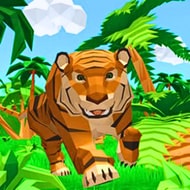
 A single tiger family can raise up to four cubs at once. That one number sits at the center of Tiger Simulator 3D, a game that drops you into a forest as a wild tiger who hunts, bonds with a mate, and slowly grows a family that fights and forages together.
| Genre | 3D animal simulation |
| Setting | Open forest shared with panthers and elephants |
| Core loop | Hunting, quests, family building, customization |
| Max cubs | 4 per family |
| Currency | Coins earned from tasks and hunts |
Every run in Tiger Simulator 3D starts with the same basic need: hunt prey and drag meat back to feed whoever depends on you. Early on that’s just your own tiger, but once a mate joins and cubs arrive, the same hunting grounds have to stretch further to keep everyone fed.
The forest is shared territory, and panthers and elephants wander the same stretches of ground your tiger hunts through. Elephants aren’t targets so much as obstacles or scenery, while panthers can complicate a hunt if they’re competing for the same prey nearby.
Feeding cubs specifically matters for their growth, and a tiger that neglects hunting duties in favor of wandering the map tends to fall behind on the quests that expect a well-fed family to complete.
Finding a mate and starting a family is one of the features that separates Tiger Simulator 3D from a plain hunting simulator. Once you’ve paired off, leveling up unlocks up to four cubs, and those cubs eventually hunt and fight alongside the adults instead of just following passively.
Raising a full litter changes how territory disputes play out, since a group of five tigers moving together pressures rival animals in a way a lone tiger simply can’t. That shift is part of what keeps sessions going well past the first successful hunt.
Talking to friendly tigers scattered through the forest opens up quests tied to this family structure, ranging from defending territory to tracking down hidden items, and completing them tends to reward the coins needed for upgrades later.
Coins earned from hunting and quests go toward two very different things in Tiger Simulator 3D: cosmetic customization and raw combat ability. Skins and hats for your tiger, its mate, and the cubs are purely visual, but they’re also the clearest sign of how long a session has been running.
Skill points work the other way, going into attack, energy, or life, and choosing where to put them changes how a tiger handles fights against bosses later in a run. A build that dumps everything into attack can burn through energy fast during a long chase.
Bosses and tougher wildlife show up as the family grows, and taking one down usually requires the whole pride pitching in rather than a lone tiger relying on stats alone.
A common mistake in Tiger Simulator 3D is pouring every early skill point into attack while ignoring energy, which leaves a tiger fast to anger but slow to actually catch anything once a hunt turns into a chase. Energy management ends up mattering more than raw damage in most early encounters.
Players also tend to skip quests from the friendly tigers because hunting alone feels more direct, missing out on a steady stream of coins that quests provide compared to scavenging for meat drop by drop.
The last thing beginners underestimate is how much territory pressure builds once cubs are old enough to fight. Sending a family into a boss encounter too early, before cubs have grown enough to hold their own, usually ends the fight faster than expected and in the wrong direction.
A tiger family can raise up to four cubs once the player has leveled up enough, and those cubs eventually join hunts and fights alongside the adult tigers rather than staying on the sidelines.
Skins and hats for your tiger, its mate, and its cubs are bought with coins earned from hunting prey and completing quests handed out by the friendly tigers scattered across the forest.
Skill points spent on attack, energy, and life directly shape how a tiger performs against bosses and rival predators, so a family that never spends points on energy tends to lose long chases even with strong attack stats.
Tiger Simulator 3D turns a simple premise, live as a wild predator, into something with real weight once a mate and four cubs are depending on your next hunt. Between the territory shared with panthers and elephants and the coins funding both skins and skill points, there’s enough happening in this forest that a single tiger’s story rarely feels the same twice.


There are no reviews yet. Be the first one to write one.
 Optimized by Seraphinite Accelerator