
 (No Ratings Yet)
 Loading...
Fullscreen











![Hello Kitty [HORROR]](https://gamefyno.com/wp-content/uploads/2025/03/hello-kitty-horror-1.jpg "Hello Kitty [HORROR]")
 (No Ratings Yet)Loading...
 What happens if a ghost is too polite to scare anyone away from the house it’s haunting? That question is basically the setup for Toca Boo, a short haunted-house game where you’re not the intruder — you’re the one being intruded on, and the only tool you have is fright.
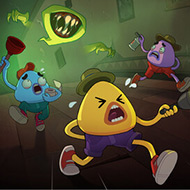
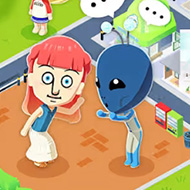
The premise flips the usual haunted-house formula. Instead of a family moving in and finding something wrong in the walls, a string of prospective buyers tour the property one at a time, and it’s up to the ghost living there to make each one leave before they sign anything.
The core loop is deceptively small: hold the mouse button to drift the ghost around the rooms, get close to a buyer while they’re distracted, and trigger a scare before they notice you coming. A buyer who catches a glimpse too early just gets wary instead of terrified, wasting the approach.
There’s no tutorial popup walking you through any of this, and that’s one of the more debated parts of the whole thing — you figure out the scare timing by getting it wrong a few times first, which some players find charming and others find frustrating in a game this short.
One detail only shows up after a few tries: a buyer’s stance changes the instant they clock the ghost, a small flinch that gives away the failed scare a beat before they actually bolt for the door.
Beginners tend to make the same error: they treat every buyer like an immediate target and rush in from across the room. That telegraphs the approach and the moment is gone before the scare even triggers. The better habit is waiting for a buyer to stop and study a piece of furniture, then closing the distance while their attention is fixed elsewhere.
A few habits separate a clean run from a messy one:
More advanced players learn to bait a buyer’s attention toward an object on the far side of a room, keeping the exit clear for a follow-up scare on whoever wanders in next.
Early in Toca Boo, there’s usually just one buyer wandering a room or two, giving plenty of room to practice positioning without consequence. By the time later buyers show up, more of the house is occupied at once, and a scare that was safe earlier now risks alerting someone nearby. The curve isn’t about faster buyers so much as tighter margins for error.
That shift is also where the game earns comparisons to older haunt-the-house style flash games — frightening intruders out of a home isn’t a new idea, but the polish on the animations and the reactions buyers have when they finally bolt is the detail reviewers single out most.
Horror fans who came in expecting real scares tend to walk away calling it more charming than frightening — which fits, since it was built around the idea of cringe rather than fright. Player ratings hover around 4 out of 5, tracking with how consistently people praise the buyer animations while wishing the whole thing lasted longer.
The most satisfying moment in the whole thing is watching the last buyer finally break and flee the property — after several near-catches, that final bolt lands with real payoff. Completionists tend to replay it chasing a cleaner run where no buyer gets more than one glance at the ghost.
The lack of anything beyond that last chase is something players still bring up — satisfying, but leaving the whole thing feeling like a fragment of a bigger idea.
Speedrunners who replay it a few times start route-planning around the fixed room layout, since knowing which room a buyer heads to first turns a reactive scramble into a rehearsed routine.
Movement is mouse-driven: holding the left button drags the ghost toward the cursor at a steady drift rather than a snappy step, which is why early attempts tend to overshoot a buyer’s position.
Losing track of a buyer too long lets them finish their tour and close the sale, ending the run — the house gets sold out from under the ghost with no way to undo it.
Yes — clearing every buyer without a single sale is the win condition, and it’s the moment the game visibly shifts tone, rewarding a careful, room-by-room approach over rushing.
Toca Boo isn’t trying to be a long game, and it doesn’t need to be — one stubborn ghost, one house, and a rotating cast of buyers who never see it coming is enough to make its short runtime worth returning to.

There are no reviews yet. Be the first one to write one.
 Optimized by Seraphinite Accelerator