 (1 votes, average: 5.00 out of 5)
 Loading...
Fullscreen









![Hello Kitty [HORROR]](https://gamefyno.com/wp-content/uploads/2025/03/hello-kitty-horror-1.jpg "Hello Kitty [HORROR]")
 (1 votes, average: 5.00 out of 5)Loading...
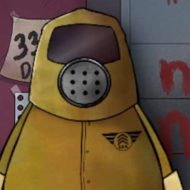
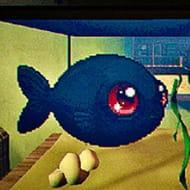
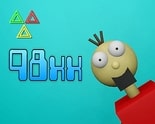
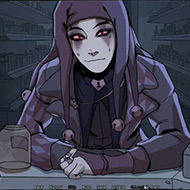
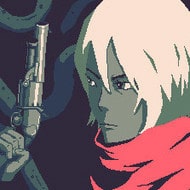
 Endacopia looks like something pulled from a beige-box educational CD-ROM circa 1994 — chunky pixels, a friendly point-and-click cursor, cheerful color palettes. Then a clown corpse starts chasing you through a hallway, and the illusion breaks completely. That contrast is the entire identity of the game, and it’s a contrast the game seems to enjoy rubbing in your face at every possible opportunity.
| Genre | Point-and-click puzzle adventure with psychological horror elements |
| Platform | PC (Steam) |
| Core mechanic | Guide a lost child through inventory-based puzzles across surreal, hostile realms |
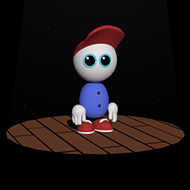
You never control a traditional hero in Endacopia. Instead, you act as an unseen guardian angel steering Mellow, a lost child navigating a world that runs on rules that make sense to no one but itself. He’s not equipped for danger and doesn’t pretend to be — his only real asset is a strong gut instinct, which the game leans on constantly to signal when something is wrong before it’s shown outright, usually through a subtle animation cue rather than any on-screen warning text.
This framing matters because Endacopia isn’t interested in empowering the player the way most adventure games are. You’re reacting on Mellow’s behalf, which keeps a persistent undercurrent of vulnerability running through even the game’s lighter, more comedic stretches — players who go in expecting a standard puzzle-solver protagonist tend to be caught off guard by how consistently the game reminds you that Mellow himself is the one in danger, not some abstract player-avatar standing in for him.
Early on, the tone swings hard between silliness and dread within the same room, and that whiplash is intentional rather than a rough seam in the writing. Horror-adventure fans tend to read this as confidence — a game secure enough in its identity to let a joke land seconds before a jump-scare — while players coming in purely for puzzle-solving sometimes find the tonal snap harder to settle into.
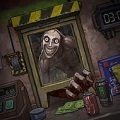
Inventory puzzles make up most of the challenge, but each area reshapes how those puzzles work, and that structural variety is one of the clearer reasons the game holds attention across a full playthrough rather than settling into a repetitive fetch-quest rhythm. The office realm runs on a capitalist credit system — you’re buying your way past doors, gambling at oversized roulette wheels, and competing in dice-based game shows just to keep moving forward. It’s one of the more memorable structural choices in the game, since progress is explicitly tied to currency rather than traditional key-and-lock logic, which means a player low on credits has to backtrack and earn more rather than simply searching harder for a missing item.
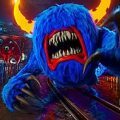
Misery Town shifts the format again with a toy train minigame — hopping obstacles rather than solving inventory puzzles — while other sections drop you into first-person confrontations with the game’s weirdos, a genuine tonal and mechanical departure from the point-and-click pacing everywhere else. Players chasing multiple endings will notice these minigames aren’t filler; several tie directly into which ending path unfolds, so skipping or rushing through the toy train sequence in Misery Town can quietly close off narrative beats a more careful playthrough would have caught.
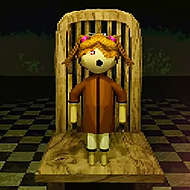
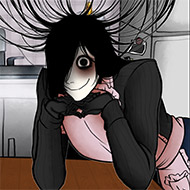
A red-and-black warning screen tells you upfront that some parts of the game may be considered disturbing, and it isn’t bluffing. Body horror, unsettling imagery, and sudden jump-scares sit right next to genuinely funny dialogue, sometimes in the same scene, and the game rarely gives advance warning before flipping from one register to the other. That tonal collision is one of the more divisive things players discuss — some find it exhilarating, a genuine reason the game stands apart from more predictable horror-adventure titles, while others feel the comedy occasionally undercuts the dread it just built, robbing certain scares of the weight they were clearly aiming for.
Genesis 01 is one of the more talked-about figures players encounter, known partly for a since-patched glitch where equipping the skateboard near it would temporarily cause it to react erratically — a bug that’s become something of a running reference point in community discussion even after being fixed, since it was one of the earliest widely-shared glitches from the game’s first patches. Bug fixes referenced in official patch notes — glitched textures near the core button, a camera item that stopped working on a green mug, Mellow rendering behind a rock near the waterfall code door — give a sense of how actively the game has been maintained since launch, with the developer directly soliciting bug reports through email in the patch notes themselves.
Horror-adventure fans get the atmosphere they’re looking for, particularly once the office realm’s capitalist credit system makes the danger feel systemic rather than scripted. Puzzle purists get genuinely varied inventory logic instead of copy-pasted fetch quests, since almost every realm reinvents how items are found and used. Completionists get a nonlinear structure with multiple endings worth replaying for, and the branching is substantial enough that a single playthrough rarely surfaces every character route on the first attempt.
User reviews currently sit at 98% positive across more than 2,700 ratings, which is a rare level of consensus for something this tonally unpredictable. Whatever Endacopia is doing — pixel-art edutainment aesthetics wrapped around dice-based gambling, a clown corpse chase, and Genesis 01’s now-patched skateboard glitch — it’s landing with the people who finish it.

There are no reviews yet. Be the first one to write one.
 Optimized by Seraphinite Accelerator