

 (No Ratings Yet)
 Loading...
Fullscreen














 (No Ratings Yet)Loading...
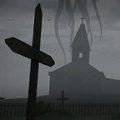
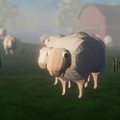
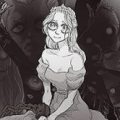
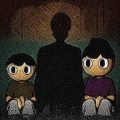
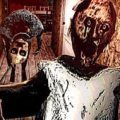
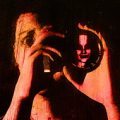
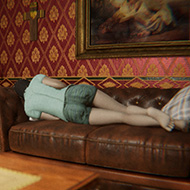
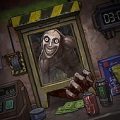
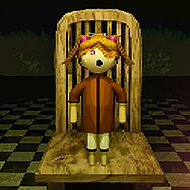
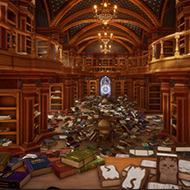
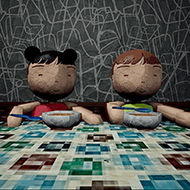
Mandela Basics: Encounter looks like a bright, goofy edutainment schoolhouse but plays like analog horror, with an Alternate prowling the halls while you hunt for notebooks. The cheerful palette is bait, and the mod knows exactly how long to let you believe it.
This is a mod that fuses two very different things: the schoolhouse structure of Baldi’s Basics and the analog horror world of The Mandela Catalogue. Players describe it as someone turning the Mandela Catalogue into Baldi’s Basics, and that one sentence answers the most common question about the game. If you have played either source, you already know half of what is going on.
The marriage is odd, but it works. Each side supplies exactly what the other lacks.
The word Encounter will ring a bell for anyone who has heard the song of the same name in Mandela Catalogue fan mods, and the name leans on that association. The Baldi’s Basics blueprint underneath is first-person and simple: wander a schoolhouse, collect notebooks, and escape while something hunts you. Flat colors and silly textures hide how quickly that blueprint turns tense when the hunter is an Alternate.
Alternates are the shapeshifting antagonists of The Mandela Catalogue, beings that imitate people and hunt the humans they copy. The mod puts an Alternate in the chasing role that a teacher normally fills in the Baldi’s Basics template, which changes the mood of every hallway. A schoolhouse is supposed to be safe, and that expectation is what gets used against you.
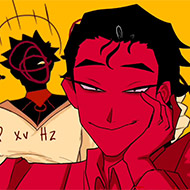
Series fans will recognize N, the Flawed Impersonator from the THINK Principle episode, as the face most associated with this kind of fear. Newcomers only need to know that Alternates are built to look familiar.
Fans who know the THINK Principle, the in-universe guide on spotting doppelgangers, will want to look for nods to it in signs and classroom details, though how many appear depends on which edition of the mod you play. Baldi’s Basics veterans who never watched the series can still enjoy the chase, but the references land harder with Mandela County context. Neither group gets a worse game, only a different one.
The Baldi’s Basics blueprint uses seven notebooks, and Mandela Basics is built on that same structure. Each notebook sits in a classroom and brings you closer to the exit, but collecting more of them also makes the chaser faster. Early in the game you have time to look around, and by the time the last notebook is in your hands the Alternate is no longer a background problem.
In the Baldi’s Basics template every notebook also comes with a short math quiz, and wrong answers make the chaser angrier. That pairing of schoolwork and survival is the smartest idea the mod inherits.
The questions are easy on paper, but under pressure players misread them, and a single wrong answer can undo several minutes of careful play. Once the third notebook is collected, most runs stop feeling relaxed and start feeling like a countdown. Players who like methodical puzzle pacing will enjoy slowing down for each quiz, while speed-focused players will treat every question as a tax on the clock.
The chase is driven by sound as much as by sight. In Mandela Catalogue lore, Alternates can be lured out by audio that mimics human terror, and that detail gives a noise-driven chase an extra layer of meaning. Whether the mod leans on that lore directly or not, the practical rule is the same: loud movement tells the Alternate where you are.
Listen before you commit to a corridor, because a quiet hallway is never as empty as it sounds.
Doors work as both shelter and signal, so closing yourself into a classroom can buy time while also telling you something about where the hunt is heading. Players who prefer stealth will walk more and run less, using the quiet stretches to read the Alternate’s position from audio cues. Players who prefer speed will rush the early notebooks and accept the risk, which works until the pace picks up.
Mechanically the loop feels familiar, because the skeleton is the same: a schoolhouse, seven notebooks, and a hunter that speeds up. What changes is the mood. The unsettling art and the Mandela County setting make a corridor you would have crossed casually in the original feel like a place where you are being watched.
The first two minutes are where players notice this most. The bright, simple look makes you relax, and then the Alternate shows that relaxing was a mistake.
The honest debate is whether the combination helps either source. Some Mandela Catalogue fans feel that putting analog horror into a schoolhouse template softens the dread, while others argue the contrast is exactly why it works. As a fan project it also has the rough edges you would expect, so treat difficulty and polish as variable rather than guaranteed.
Most failed runs come from a short list of habits, and the same ones show up whenever players compare notes on how they got caught. Almost all of them trace back to treating the schoolhouse like a place to rush through instead of a place to read.
The fix for almost all of them is patience. A player who maps the schoolhouse early, answers carefully, and moves quietly will usually survive longer than one who sprints for the exit. Newcomers to analog horror in particular tend to underestimate how much the audio is telling them.
Mandela Basics: Encounter is at its best when a quiet hallway and a ticking notebook count make you doubt every sound. The Alternate never needs to be fast to be frightening, because the schoolhouse has already convinced you that nowhere is safe.


There are no reviews yet. Be the first one to write one.
 Optimized by Seraphinite Accelerator