

 (No Ratings Yet)
 Loading...
Fullscreen













 (No Ratings Yet)Loading...
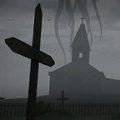
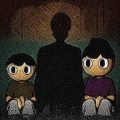
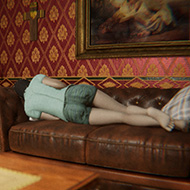
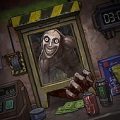
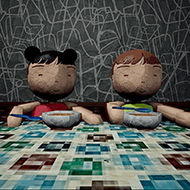
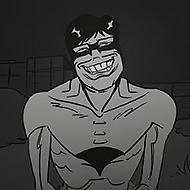
You are watching the glass when an animatronic comes straight through it, and the safe distance you thought you had vanishes in a single jumpscare. CTRL-Z: Zero builds its horror around that moment, taking a fangame series known for tense night shifts and adding danger that refuses to stay behind a barrier. Anyone who expects to simply wait out the clock will have that assumption corrected quickly. The game rewards players who treat every window as a possible entrance.
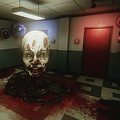
In most fangames of this kind, a window or a door is a rule you learn. The animatronic stops, you react, and the barrier holds. Glass looks like the same promise, a transparent wall that lets you see danger without being touched by it. The demo breaks that promise on purpose, which is why clips of animatronics crashing through glass travel so quickly among horror players. The first time it happens you lose more than a life, because you also lose a habit.
That habit matters more than any single scare.
Early in the demo you are still testing which spaces are safe, and once the glass gives way that testing carries a real cost. Players who lean on quick reflexes get a particular lesson here: waiting until the last second pays off less when danger can arrive through a surface you were trusting. The barrier stops being a fixed point on your mental map and becomes something you have to keep checking.
The series behind the game is built around the night shift. Control Z set the tone with an abandoned subway facility, where you kept systems running while animatronics closed in, and its demo covered two nights. That is a useful reference point, because short demos tend to teach one lesson per night instead of dumping every rule at once. The glass looks like exactly that kind of lesson.
Managing systems while watching for danger is what keeps a shift tense.
Beginners usually fix one problem at a time and let the next one build quietly behind them. The better habit is a steady loop: check the systems, check the openings, then check the systems again, so nothing is left unobserved for long. By the time the pressure peaks near dawn, that loop is the only thing separating a calm finish from a scramble.
Breaker discipline. The circuit breakers in Control Z worked as a constant pressure gauge, and a shift could unravel as the power system neared its limit. Veterans who keep one eye on the breakers will feel at home, though even a perfect routine cannot help when danger arrives through glass.
Window awareness. Anyone who survived Ennard and the other animatronics underground in Control Z learned to read every opening as a risk. Extending that instinct to glass is the obvious adjustment, and it is the one the demo seems built to test.
Pattern memory. Fans who log every movement tend to enjoy this series most. The glass does not erase that skill, but it does mean a memorised routine can fail the moment something unexpected happens.
A demo only shows a slice, so every judgment about the glass should stay provisional. What the sample proves is that the idea works as a jumpscare and as a rule-breaker. What it cannot prove is whether the surprise survives repeated shifts. That is the familiar debate around horror fangames: some players prefer threats they can learn and counter, while others want danger that keeps them uncertain, and both camps have a point.
The name also leaves a question open about where the game sits in the series timeline. The demo alone does not answer it.
For anyone asking how to survive the glass moments, the practical advice is to keep a margin between yourself and any pane, and to stop treating a quiet window as proof of safety. For anyone asking whether the game is actually scary, the sudden break is the main reason it is. And for newcomers wondering whether they need the earlier shifts first, the demo is a quick way to find out whether this kind of pressure suits you.
CTRL-Z: Zero works best as a test of habits: the circuit breakers from Control Z teach routine, and the glass exists to punish routine. Whether you arrive for Ennard-era nostalgia or for the surprise itself, the lesson is the same. Stop trusting the barrier, keep your margin, and never assume a quiet pane of glass is only a window.

There are no reviews yet. Be the first one to write one.