 (1 votes, average: 5.00 out of 5)
 Loading...
Fullscreen











![Hello Kitty [HORROR]](https://gamefyno.com/wp-content/uploads/2025/03/hello-kitty-horror-1.jpg "Hello Kitty [HORROR]")
 (1 votes, average: 5.00 out of 5)Loading...
 What happens when a patient’s ears don’t quite line up between the reception window and the Polaroid photo in your hand? In Animal Hospital Anomaly, that half-second of doubt is the entire game — and getting it wrong can cost you more than a wasted shift, sometimes more than you realize until the damage is already done.
| Genre | Co-op survival horror, spot-the-anomaly (Roblox) |
| Platform | Roblox |
| Core mechanic | Screen incoming patients across three information sources and reject disguised anomalies before they enter the clinic |
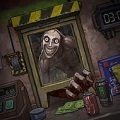
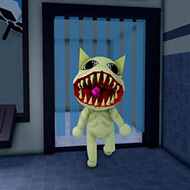
You’re a night-shift receptionist at a veterinary clinic, and every patient has to be screened before they’re let inside. Screening pulls from three separate sources: what you can see directly through the window, the photo taken with the Polaroid camera, and the live feed from the security cameras. Real animals get treated. Anomalies get turned away using the red shutter, and letting one slip through has consequences that ripple through the rest of the shift, since an admitted anomaly doesn’t simply vanish — it becomes an active threat wandering the clinic alongside whatever else is already loose.
Each shift runs roughly five to eight minutes and generates a set number of patients, a portion of which are anomalies — you never know the exact count going in, which is exactly what keeps the screening tense even after dozens of shifts. As shifts progress, both the patient quota and the anomaly frequency climb, so the screening pace that worked on shift one starts to feel too slow by shift five, forcing players to compress the same three-source check into less time per patient without cutting corners.
New players in Animal Hospital Anomaly consistently misjudge how much the three information sources can disagree with each other. Trusting only the window view, without cross-checking the photo or camera feed, is the single most common way a shift goes wrong early on, since several anomalies are specifically designed to look completely ordinary at the window and only reveal themselves once a second source is checked.
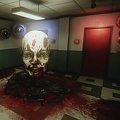
Skinwalker is widely considered the hardest anomaly to catch. At the window and in the Polaroid photo it gives away nothing — the only tell is on camera, most reliably the lobby feed, where players might catch pronounced teeth or bloodied eyes that aren’t visible anywhere else, meaning a player who only ever checks the reception desk camera can go entire shifts without ever spotting one. Mismatched Ears works differently: it’s purely appearance-based, and the visual gap between the real patient and its photo or camera version can be small enough that players zoom in mentally on ear shape alone, comparing curvature and spacing rather than looking for anything more obviously wrong.
Cross-checking the window view against the Polaroid photo before making a call catches the anomalies that rely on camera-feed mismatches alone, since a discrepancy that’s invisible at the window often shows up clearly once the photo is compared side by side. Using the security camera feed as a tiebreaker when the first two sources agree but something still feels off catches the rarer anomalies built specifically to fool both the window and the photo, which are the ones experienced players describe as the real test of a shift. Treating any anomaly you’re unsure about as a reject costs a small amount of efficiency but avoids the much larger cost of a wrongly admitted patient, since an admitted anomaly actively threatens the rest of the clinic rather than simply being turned away and forgotten.
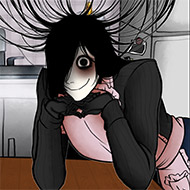
Community trackers currently place the confirmed anomaly count at around a dozen or more, and that number keeps growing as updates roll out, with new entries typically leaning on subtler tells than the earlier, more obvious ones. Not every threat comes through the window, either — Bed Monster hides under hospital beds and gives itself away through long black arms sticking out from underneath, and it’s dealt with by offering it Maple Syrup rather than confronting it directly, a solution players initially found through trial and error before it became common knowledge. Stalker is a different kind of threat entirely: a fully black silhouette with a frozen expression that mostly just watches from a distance, unsettling precisely because it rarely does anything at all — the dread comes from not knowing whether it will escalate, not from any immediate action it takes.
Sanity is the resource that actually ends your shift if it hits zero, and it drains faster the longer threats like the Stalker or roaming ghosts go unaddressed. The window anomaly deserves particular caution — confronting it directly and asking it to leave can cost up to twenty sanity points in one hit, and reaching for a taser against it causes serious health loss instead of solving the problem, making it one of the clearest traps for players who assume aggression is always the safer option. The safer route, which experienced players lean on, is offering it something rather than fighting it, mirroring the Bed Monster’s Maple Syrup solution and reinforcing a pattern the game rewards once players catch on to it.
Spending too long staring at the CCTV monitors also has a cost: hostile creatures react more aggressively the longer a player’s attention stays locked on the cameras instead of the physical clinic around them. That tension between watching the feeds and watching the room is where most of the tension in longer shifts comes from, since checking the lobby camera to catch a Skinwalker means briefly losing track of whatever might be creeping toward the reception desk in the meantime.
Co-op groups tend to split these responsibilities — one player dedicated to screening while another monitors the halls for Stalker or Bed Monster activity, which noticeably reduces how often either threat catches someone off guard. Players purely chasing shift-survival records approach the game differently than those working through each special character’s individual story route, since the two goals pull attention in different directions, and a third type of player — those mainly interested in documenting every anomaly type for community trackers — plays more cautiously than either, often rejecting anomalies they could safely study just to avoid risking a shift-ending mistake.
There’s no full final ending here, and that’s worth knowing before you sink hours in. The structure is built around endless shifts with rising difficulty and an expanding patient quota, with the actual story delivered piecemeal through special characters and their individual arcs. Once those arcs wrap up, what’s left is the core loop repeating indefinitely — regular patients, random anomalies, and a growing sense of dread as your shift count climbs, with no final boss or credits sequence waiting at the end of it.
That design choice is one of the more debated aspects of Animal Hospital Anomaly among players. Some appreciate that it keeps the format endlessly replayable without a hard stopping point, arguing that a defined ending would undercut the whole point of an endless-shift survival loop. Others find the lack of narrative closure frustrating after investing in a character’s specific route, especially once they’ve pieced together most of a special character’s arc and are left wanting a clearer resolution. Both reactions show up constantly in shift-survival discussions, and neither side is wrong exactly — it’s a genuine trade-off in how the game is built, not an oversight.
The numbers back up how quickly this caught on: over 45.2 million visits and a peak of 135,000 concurrent players, with a 95.8% positive rating holding steady through near-daily updates. For a game built around something as small as double-checking a photo against a window view, that’s a significant audience choosing to keep checking, shift after shift, long past the point where the novelty alone would explain it.
Between the red shutter, the Polaroid camera, and the quiet dread of a Stalker standing just outside camera range, Animal Hospital Anomaly turns a simple screening job into something you second-guess long after the shift ends, and it’s Bed Monster’s Maple Syrup fix — as odd as it sounds out of context — that most players remember first when they describe the game to someone who hasn’t played it.

There are no reviews yet. Be the first one to write one.
 Optimized by Seraphinite Accelerator