
 (No Ratings Yet)
 Loading...
Fullscreen














![Hello Kitty [HORROR]](https://gamefyno.com/wp-content/uploads/2025/03/hello-kitty-horror-1.jpg "Hello Kitty [HORROR]")
 (No Ratings Yet)Loading...
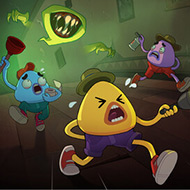
 Mimic Party turns imitation into the central challenge, asking players to recognize patterns, copy behavior, and react before confusion spreads through the group. The game’s humor comes from uncertainty: a familiar action may be genuine, while a similar-looking action may be a trap.
The first skill is observation. Watch how characters move, respond, and repeat actions before committing to a choice. Beginners often react to the loudest or most obvious signal, but the game rewards noticing small differences.
Early rounds teach the basic pattern of imitation. Once several actions overlap, the player must separate meaningful behavior from distraction. The game becomes more demanding when timing and recognition are required at the same time.
Party-game fans will enjoy the social confusion, while puzzle players may focus on identifying rules. The strongest rounds create a balance where everyone understands the objective but nobody feels completely certain.
Mimic Party is easier when you learn the rule behind each round rather than memorizing one answer. A visual cue, sound, or movement may signal the correct response. The player should watch for the condition that makes an action valid.
A common beginner mistake is copying too quickly. Waiting a moment can reveal whether the action is genuine or deliberately misleading. However, waiting too long can also cause failure, so the game constantly balances caution against timing.
Some players love the chaos, while others find the confusion frustrating when the visual signals are too similar. That is the game’s main divisive feature. Clear attention helps, but the design intentionally creates uncertainty.
Players often use terms such as “pattern read,” “bait action,” and “clean round” when discussing successful play. These phrases describe recognizing the rule, avoiding a misleading signal, and completing a sequence without hesitation.
Competitive players will watch for repeatable patterns and try to reduce reaction time. Casual groups may enjoy deliberately misleading friends and creating funny failures. Observation-focused players often perform best because they do not commit to the first visible answer.
A memorable playing detail is the moment an entire group copies the same wrong action because one misleading cue looked convincing. The game’s comedy comes from that shared mistake as much as from winning.
Watch the full pattern before copying. Mimic Party rewards players who identify the rule behind a cue instead of reacting only to the most noticeable movement or sound.
Some rounds require a quick response, but acting too early can mean copying a bait action. The game asks players to balance observation with decisive timing.
Shared uncertainty creates funny mistakes, especially when several players imitate the same false signal. Mimic Party works well when players enjoy both competition and group confusion.
Mimic Party is built around imitation, observation, and the comic tension of uncertain signals. Learning the pattern before acting gives the game structure, while misleading cues and group mistakes provide its most memorable moments.


There are no reviews yet. Be the first one to write one.
 Optimized by Seraphinite Accelerator