 (1 votes, average: 5.00 out of 5)
 Loading...
Fullscreen















![Hello Kitty [HORROR]](https://gamefyno.com/wp-content/uploads/2025/03/hello-kitty-horror-1.jpg "Hello Kitty [HORROR]")
 (1 votes, average: 5.00 out of 5)Loading...
 What happens when you pick the wrong door twice in a row and the game doesn’t even pretend to give you a break? That question is the entire design philosophy behind Project Threshold, and it’s usually the first thing new players ask after their third restart.
| Genre | First-person psychological horror, walking simulator |
| Perspective | First-person |
| Core structure | 10 sets of doors, no checkpoints |
| Typical playtime | 30 to 60 minutes per full attempt |
You’re not an investigator who wandered into a haunted building by choice. You’re a registered participant, and the game never lets you forget it — recorded instructions, observed hallways, and a structure that feels engineered rather than accidental. Every room exists to test something specific about you, and the game is upfront that escape isn’t guaranteed.
The framing matters because it changes how you approach each threshold. This isn’t a title where curiosity is rewarded for its own sake; it’s one where hesitation and instinct get evaluated constantly, and the facility clearly expects you to fail before you succeed.
Players who go in expecting a conventional haunted-house crawl tend to get thrown off by how procedural everything feels. There’s no enemy patrolling the halls looking for you. There’s just a door, a decision, and consequences that don’t announce themselves until it’s too late to reverse them.
Each set presents one blue door and one red door, and nothing on the surface tells you which one is safer. That’s deliberate. The game trains you to treat this as pattern recognition across multiple runs rather than a single correct answer you can look up and apply forever.
What separates confident players from newcomers is willingness to accept a bad outcome as data. A wrong pick that ends in restarting from the beginning still teaches you something concrete about that specific set.
There is no mid-run save state. Die or get caught anywhere among the ten sets, and you’re back at the start with nothing but memory to carry forward. This is the single most divisive design choice players bring up in discussions — some call it the only way the tension could work, others call it punishing for a game with this much randomness baked into early attempts.
The intent is clear even if it frustrates people: every failed attempt is supposed to make the next one easier, because you’re no longer walking into a set of doors blind. In practice, this means the first twenty minutes of any session look almost identical until you’ve built up enough runs to recognize what’s coming.
It’s worth being honest about the tradeoff here. A handful of players describe the loop as closer to memorization than horror once you’ve died enough times, and that criticism isn’t unfair — the fear response fades once a room becomes a known quantity.
Community shorthand for this structure is “the loop,” and it comes up constantly in comment sections and guides. Once you’ve reached room seven or later on a clean run, you’re firmly past the point where most first-time players give up.
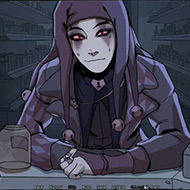
Certain rooms get named informally by the community because official labels don’t exist. The doctor room comes up often in comment threads as one of the harder sets to read correctly on a first attempt, and it’s frequently the point where new players lose a run they thought was going well.
Other encounters get remembered for tone rather than difficulty — Project Threshold has at least one moment players describe as unexpectedly funny amid the dread, which says something about how deliberately the pacing avoids being relentlessly grim throughout.
These named moments matter for orientation. When guides reference the doctor room or similar landmarks, they’re using the same shorthand regular players already rely on.
An achievement tied to reading every letter scattered on the floor across the facility trips up a lot of players, partly because a clean, safe route through the doors doesn’t always pass near every letter’s location. Balancing exploration against survival is its own mini-decision layered on top of the door choice itself.
By the time most players reach a reliable route, they’ve stopped treating each door as a coin flip and started treating the whole ten-set sequence as memorized choreography. That shift, from guessing to knowing, is where Project Threshold earns most of its lasting appeal even among people who found the early attempts frustrating.
Project Threshold isn’t interested in being fair on the first attempt, and that’s the point — from the opening instructions to the doctor room to whichever door finally gets you past set ten, the whole experience is built to reward the players willing to die enough times to learn it.

There are no reviews yet. Be the first one to write one.
 Optimized by Seraphinite Accelerator