 (No Ratings Yet)
 Loading...
Fullscreen













![Hello Kitty [HORROR]](https://gamefyno.com/wp-content/uploads/2025/03/hello-kitty-horror-1.jpg "Hello Kitty [HORROR]")
 (No Ratings Yet)Loading...
 You click into Tiny Bunny expecting something soft, and the title alone promises it, so the first seconds catch you off guard. The screen drains to grey, the cursor becomes a small pointing hand, and a boy named Désiré stands alone on an empty stretch of sand. No music swells, no tutorial pops up. You decide what to touch first, and that quiet is where the dread starts.
| Genre | Point-and-click psychological horror adventure |
| Main character | Désiré |
| Visual style | Black and white, colour-blind perspective |
| Core actions | Examine, pick up, talk, solve riddles |
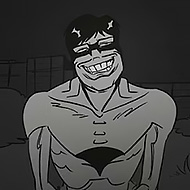
The framing device is simple once it clicks: everything is filtered through Désiré’s own eyes, and Désiré cannot see colour. Tiny Bunny never explains this with a menu or lore text, it just drops you into a monochrome beach scene. Beginners often assume the missing colour is a toggle and waste minutes hunting for menus that don’t exist.
Once that assumption falls away, the grey presentation becomes the actual subject. Every object Désiré can interact with is picked out only by outline and shading, so you learn to read the world by contrast, not colour.
Regulars recognize the trick fast: interactables aren’t hinted with a glow, so pixel-hunting is part of the rhythm. It’s divisive among fans, some call it atmospheric, others obscure.
The scene defining this chapter is small but strange. Désiré wants to cast a private love spell on a classmate, and the ritual is childlike: write her name, seal it in a small box with an egg, bury it in the sand. No combat, no timer, just a boy performing a superstition he half believes in.
What makes it land is how seriously the game treats it. Nothing mocks Désiré for the ritual, and the grey palette gives it a hushed, funereal weight a colour scene wouldn’t carry. Casual players sometimes rush the puzzle looking for a fail state, but Tiny Bunny isn’t built around losing here.
New players often miss that action order matters without an explicit penalty, since skipping a step and returning later changes how a character’s dialogue reads.
Across its full scope, Tiny Bunny eventually introduces more than forty characters, and even this early stretch sets the pattern. Conversations are short and clipped, and every face is drawn with the same stark shading Désiré uses for objects, flattening everyone into one visual register.
Players who stick with the riddles notice each character twists Désiré’s understanding of something ordinary into something a little unsettling. Nobody is purely a puzzle dispenser, and even minor figures carry a line that recontextualizes what happened a scene earlier.
The riddles rarely have an obvious solution on screen, so plenty of players admit leaning on outside guides at first. That’s a real friction point in fan discussions: the logic feels personal to the writer, satisfying once solved but frustrating in the moment.
The difficulty here isn’t about reflexes, it’s about attention. Early scenes give a handful of objects and exits, but the game gradually hides details inside dialogue rather than on screen, so listening matters as much as clicking.
One sound choice stands out: ambient noise on the beach thins out the moment Désiré picks up the egg, leaving just footsteps in the sand. It’s the exact point new players often say the beach stopped feeling peaceful.
Advanced players who return after finishing later chapters re-examine background objects they clicked past, since Tiny Bunny plants small visual rhymes that only click once you know where the story is headed.
Almost entirely slow-burn dread rather than jump scares. The horror comes from the flat grey presentation, the odd sincerity of Désiré’s buried box, and dialogue that reframes earlier scenes rather than any sudden shock.
No single wrong guess locks you out permanently. Désiré can retry most interactions, though missing a detail during the love spell can change how a character responds later.
The monochrome filter represents Désiré’s own colour blindness, a deliberate, permanent lens rather than a graphics setting. Shading and outline, not colour, carry the storytelling throughout.
Tiny Bunny asks for patience rather than speed, and the payoff is a beach scene, a buried egg, and a boy named Désiré that stick with you longer than the runtime suggests. Anyone expecting a light mascot story bounces off the grey filter fast; anyone who sits with it ends up quoting Désiré’s little love spell days later.

There are no reviews yet. Be the first one to write one.
 Optimized by Seraphinite Accelerator