
 (No Ratings Yet)
 Loading...
Fullscreen














![Hello Kitty [HORROR]](https://gamefyno.com/wp-content/uploads/2025/03/hello-kitty-horror-1.jpg "Hello Kitty [HORROR]")
 (No Ratings Yet)Loading...
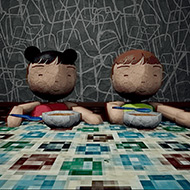
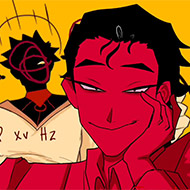
 No one likes you never actually tells you whether what you’re seeing is real, and that refusal is the whole horror. It’s a short game about a boy living with schizophrenia, and rather than explaining his condition from a safe distance, it drops you directly into his perception, jumpscares and all, and leaves you to sort out what’s genuinely threatening him.
| Format | Short narrative horror |
| Protagonist | A boy living with schizophrenia |
| Tone | Dark humor mixed with emotional weight |
| Platforms | Windows, macOS, Linux, Android |
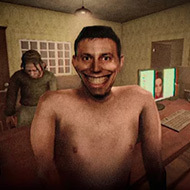
Most horror games that touch on mental illness use it as set dressing for a twist ending. No one likes you takes a different approach, building its entire premise around the boy’s schizophrenia as the actual subject rather than a reveal saved for the final scene. The hallucinations and unsettling encounters throughout the game aren’t just scares for their own sake, they’re framed as part of his lived experience, which changes how a lot of players end up interpreting every jump scare that follows.
What beginners get wrong going in is expecting a conventional haunted-location structure with a clear external monster to escape. No one likes you resists that framing on purpose, and players looking for a straightforward threat to outrun often find themselves more unsettled by the ambiguity than they would be by a monster they could actually see clearly.
The game doesn’t hold back on unexpected noise and jumpscares, and several of its most talked-about moments hit without much warning, which mirrors the disorienting quality of the perception it’s trying to portray rather than existing purely as a cheap scare. Community discussion around No one likes you frequently notes how the loudness itself feels intentional, less about startling you for a laugh and more about recreating a sense of being overwhelmed without control over the moment.
One of the more surprising things players bring up about No one likes you is how much dark humor runs through a story built around genuine emotional difficulty. That combination could easily feel tonally confused, but the game’s community largely credits it with keeping the experience from becoming purely bleak, letting a joke land right before or after a moment that’s genuinely heavy.
This is also the aspect of the game players seem to debate most: whether leaning into humor around a serious mental health subject undercuts the sincerity of the story or actually makes it more human and easier to sit with. Both readings show up constantly in comment threads, and the game doesn’t seem interested in resolving that tension for you.
Despite its short runtime, No one likes you leaves a disproportionate impression, largely because it doesn’t wrap the boy’s experience up with a tidy explanation once the scares stop. Players consistently mention specific moments, a particular hallucination, a specific line of internal thought, that stuck with them well after finishing, which is unusual for a horror game this brief.
It’s framed more as a personal, subjective narrative experience than an explicitly educational one, though its willingness to center the condition directly has led many players to describe it as more thoughtful than typical horror treatments of mental illness.
Its jumpscares and loud audio moments are genuinely startling, but much of its lasting impact comes from emotional unease rather than pure scare frequency, which players often describe as sticking with them longer than a typical jump-scare-driven game.
No one likes you isn’t interested in giving you a monster you can simply outrun, and by the time the credits roll, most players are left thinking less about what jumped out at them and more about the boy they spent that short, uneasy runtime seeing the world through.

There are no reviews yet. Be the first one to write one.
 Optimized by Seraphinite Accelerator