 (No Ratings Yet)
 Loading...
Fullscreen












![Hello Kitty [HORROR]](https://gamefyno.com/wp-content/uploads/2025/03/hello-kitty-horror-1.jpg "Hello Kitty [HORROR]")
 (No Ratings Yet)Loading...
 In Mushroom Oasis you start with nothing but a missing indoor cat and a reason to walk into a forest that clearly isn’t behaving like an ordinary one. That detail matters immediately, because the first stranger you meet under the tree line isn’t lost or frightened like you are — he’s been waiting.
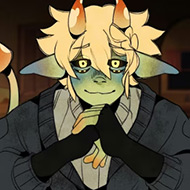
The premise is small on purpose: your cat wandered off, and tracking it leads you into a forest that starts folding its own rules the deeper you go. Within the first stretch of story you meet Mychael, a mushroom-based figure with light green skin, elven ears that fade into orange, four eyes carrying six yellow irises between them, small mushroom-like horns, and a thick tail topped with a red-and-white spotted cap. He’s unmistakably not human, and the game never pretends otherwise — the tension comes from deciding how much of your search to hand over to him regardless.
Mychael’s characterization leans away from typical yandere-romance shorthand in one specific way: the writing keeps him non-sexual and asexual by design, which shifts the story’s discomfort toward possessiveness and control rather than anything more overtly romantic. That choice shapes almost every conversation you have with him, since his attachment reads as obsessive long before it reads as loving.
Content currently spans three in-game days, each one narrowing your options a little further as Mychael’s presence in the story grows harder to walk away from. The pacing is deliberately slow — early choices feel low-stakes, almost cozy, before the forest’s real nature starts pressing in during the second and third days.
Every path through the current build leads to one of several bad endings or a single neutral outcome that pushes the story forward rather than closing it. One of the more talked-about bad endings comes from simply refusing Mychael outright and going back to sleep among the mushrooms — a choice that seems like the safe, disengaged option and instead lets the forest claim you overnight. It’s a sharp reminder that ignoring Mychael isn’t neutral in this story; every choice, including inaction, has weight.
That structure — mostly bad endings, one way to keep the story moving — is unusual for a romance-adjacent visual novel, and it’s a big part of why players treat early playthroughs as scouting runs rather than a single definitive attempt.
Both, depending on how you play him. His attachment starts as unsettling closeness and can escalate sharply if you push back too hard or too fast, which is part of why so many current endings land on the darker side rather than a clean happy resolution.
It stays relevant throughout — your cat’s fate is tied into how the forest and Mychael’s attention interact with you, so the search isn’t just a framing device that gets dropped once he shows up.
The story is built to keep expanding beyond its current three days, and later content is expected to add proper resolutions alongside the existing bad and neutral outcomes, so what exists now represents an early, still-narrowing slice of a longer arc.
What makes Mushroom Oasis stick isn’t the forest’s strangeness on its own — it’s Mychael’s specific, patient kind of wrongness, and the growing realization that finding your cat was never going to be the hardest part of walking into these woods.

There are no reviews yet. Be the first one to write one.
 Optimized by Seraphinite Accelerator