 (1 votes, average: 5.00 out of 5)
 Loading...
Fullscreen










![Hello Kitty [HORROR]](https://gamefyno.com/wp-content/uploads/2025/03/hello-kitty-horror-1.jpg "Hello Kitty [HORROR]")
 (1 votes, average: 5.00 out of 5)Loading...
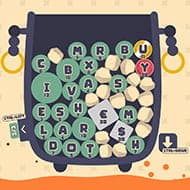
 What happens when the letters you need refuse to appear before the round timer forces your hand? That is the tension Lexispell runs on, and it arrives faster than you expect. The cauldron fills with letter bubbles governed by physics — they drift, bounce, and merge on their own schedule — and the game asks you to pull valid words from that chaos fast enough to hit a score target across 12 rounds. It sounds leisurely. By chapter three, it is not.
| Genre | Roguelike word puzzle |
| Platforms | Windows, Linux, HTML5 (browser) |
| Modes | Classic Craft, Letter Rush, Jar Puzzle, Daily Challenge |
| Rounds (Classic) | 12 rounds across 9 chapters |
| Bosses | 20+ |
Letters in Lexispell drop into the cauldron as individual bubbles. When two bubbles carrying the same letter touch, they merge into a larger version of that letter — and a larger bubble scores more points when used. This Suika-style merging is not decorative. It is the mechanical core the whole game balances around. A merged triple-E bubble scoring high enough to activate a scroll condition beats a seven-letter word that hits none of your active upgrades. Early in the game, most players ignore merging and chase the longest word they can read. That works through the first few chapters. It stops working once boss conditions start shutting down vowel scoring or reducing the cauldron space.
Ringing the bell drops fresh letters into the cauldron, but you get a limited number of drops per round, and you cannot overfill the pot. This constraint forces decisions: burn a drop trying to fish for a specific consonant, or work with what the physics has already arranged. Runes modify what the bell drops — some guarantee gem letters, which are worth a base-point premium, while others increase the chance of bonus letters appearing. Players who buy runes early and match them to their active scrolls discover that bell management becomes its own puzzle layer sitting inside the word puzzle.
Between rounds, a shop run by Henry stocks scrolls, runes, and consumable items. Scrolls are the persistent upgrade layer that carry across the run — you can equip up to 10 at once. Runes occupy a separate slot limit of 6. Items are single-use and tend toward tactical interventions: swap a letter, introduce a wildcard bubble, or alter an existing letter’s point value. The shop budget is tight in early chapters, and the community consensus is that rune investment pays off faster than hoarding coins for a high-cost scroll.
Every third round in Classic Craft is a boss encounter. Lexispell has over 20 bosses, each introducing a rule that disadvantages you for that round only. Some bosses strip all points from vowels, making consonant-heavy words suddenly critical. Others compress the effective cauldron space so bubbles merge prematurely, or they scale up the Suika growth rate until a single merge cascade can bury half your playable letters under one oversized bubble. A few bosses target specific scroll conditions directly, deactivating your most carefully assembled combo for exactly the round you most wanted it.
This is where Lexispell diverges sharply from vocabulary-focused word games. Your score ceiling is not set by knowing more words than the next player. It is set by knowing which words activate which scrolls under which boss conditions. A player who knows twenty thousand words but built a scroll set around vowel bonuses will crater against a vowel-removal boss. A player who identified that boss coming and drafted a backup word strategy survives. The community term for this is “boss-reading” — recognizing the rule pattern early in the round and adjusting word choice before the deficit compounds.
Score chasers on the leaderboard tend to be meticulous about which scrolls pair with which boss rotations. The daily challenge mode, which locks everyone into the same cauldron seed and shop sequence, is where that preparation gets benchmarked publicly. Competitive players who grind daily challenges have started cataloguing scroll synergies the way card game communities document combo decks — Lexispell rewards exactly that depth of analysis even in its current demo state.
Letter Rush is where the game’s cozy reputation comes apart. Letters drop continuously into the cauldron without stopping, and overflow equals game over. You are not aiming for a score target — you are chasing a high score while the cauldron fills regardless of what you do. Casual players who found Classic Craft relaxing tend to discover Letter Rush is a completely different skill set: reading the cauldron fast, submitting acceptable words rather than optimal ones, and never waiting for a merge to complete when submitting now keeps the level manageable. The Wand of Swap, which repositions letters in your backpack, becomes more valuable here than in any other mode.
Jar Puzzle is a static mode — no physics, no drops, just a fixed letter configuration with a target to reach. It strips away the randomness that defines the roguelike experience and exposes pure vocabulary and spatial reasoning. Some players who bounced off Classic Craft’s pacing find Jar Puzzle the more satisfying entry point. Others find it dull after the cauldron’s chaos. The honest tension here is that Lexispell markets itself as a cozy game, and Jar Puzzle fits that description, while Letter Rush and late Classic Craft chapters are legitimately stressful — a range not every player anticipated.
Each word submitted earns points based on letter values multiplied by a word-length bonus. Words of 8 letters or more trigger a 3x multiplier on top of base scoring. Scrolls can add conditions — for example, a scroll that boosts score whenever a word contains a specific letter type. The interplay between base letter values, the length multiplier, and active scroll conditions is where high-scoring runs diverge from average ones. Merged bubbles carry their boosted base value into this calculation, which is why a shorter word with two fully merged gem letters can outscore a nine-letter word with unmerged common vowels.
The backpack holds letters you pull from the cauldron manually before committing them to a word. It acts as a staging area — you can hold letters there between submissions, use the Wand of Swap to reorder them, or use the Wand of Merge to attempt a forced merge between a backpack letter and one in the cauldron. It is most useful in Letter Rush, where having a partially assembled word ready before the next drop wave gives you a meaningful time advantage.
Yes. Scrolls purchased in the shop persist across the entire run — they are your permanent build layer, not a per-round buff. This is the key distinction between scrolls and items. Items are consumed on use. Runes persist but affect only what the bell drops, not word scoring directly. Understanding that scrolls define your run identity — not your vocabulary on any given round — is the adjustment most players make between their first and third run.
Lexispell works best when a scroll combination clicks against a bell-drop pattern and a chain of merges delivers exactly the letter you needed at exactly the wrong moment. That moment — submitting the word just as the cauldron physics handed you the merge — is the kind of thing players describe when they explain why they keep coming back. The game is built in Godot, composed by Trevron, and still in active development; what already exists is enough to make the 9-chapter Classic Craft run feel worth the time of both word-puzzle veterans and roguelike players who never expected to care about spelling.

There are no reviews yet. Be the first one to write one.
 Optimized by Seraphinite Accelerator