 (1 votes, average: 5.00 out of 5)
 Loading...
Fullscreen

















![Hello Kitty [HORROR]](https://gamefyno.com/wp-content/uploads/2025/03/hello-kitty-horror-1.jpg "Hello Kitty [HORROR]")
 (1 votes, average: 5.00 out of 5)Loading...
 What happens when the tile stock in Duck Pond Mahjong runs out before you’ve cleared even half the board? That’s the exact moment most players start actually thinking instead of clicking on autopilot, because up until then the game feels almost too relaxed.
| Genre | Tile-matching puzzle |
| Core Mechanic | Matching and clearing paired tiles |
| Objective | Clear all tiles before the stock runs out |
| Controls | Mouse click-drag on desktop, swipe/tap on mobile |
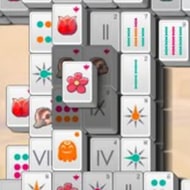
The board is dressed as a quiet pond — soft water sounds, duck-themed tile faces, a layout that visually calms down what is actually a fairly demanding puzzle underneath. The loop is simple to state: draw tiles, swap or match pairs, clear the board before the stock of remaining tiles runs dry. Where the game gets its tension is the timer running alongside that stock, which means a slow, careful player and a fast, sloppy one can both lose for completely different reasons.
New tiles get introduced as you climb through the levels, which resets the pattern-recognition players build up early on. A layout that felt readable at level three suddenly has three or four new tile types mixed in by level eight, and that’s usually where the difficulty curve becomes noticeable rather than gradual.
The game also includes a Hint button for players who get stuck scanning the board, though leaning on it too often defeats the purpose of building your own eye for pairs.
Most beginners treat the board as one flat grid and scan it left to right, top to bottom, looking for any visible pair. That works early, but it falls apart once tile density increases, because scanning randomly wastes time the timer doesn’t give back. Players who improve tend to break the board into sections mentally — same-row and same-column pairs first, since those are usually the quickest wins, before moving to matches that require longer paths across the board.
This is the community-recognized approach: clear the obvious, cheap pairs immediately, and save the harder cross-board matches for when the easy options run out. Doing it in the reverse order almost always leaves you short on time near the end.
The stock is the real resource in Duck Pond Mahjong, more than the timer itself. Every tile drawn from it that doesn’t immediately find a match sits on the board taking up space, and once the stock empties, any unmatched tiles left on the board end the run regardless of how much time remains on the clock.
This changes how experienced players approach the mid-game. Rather than matching purely by what’s visible, they start tracking which tile types have already been mostly cleared, since drawing a tile with no remaining partner on the board is effectively a wasted draw. It’s a small shift, but it’s the difference between clearing a board with tiles to spare and losing with the stock sitting empty and three unmatched tiles staring back.
On mobile, the built-in zoom function matters more than it sounds like it would. Duck-themed tiles are visually similar at a glance — several designs share color palettes — and at default zoom on a smaller phone screen, misreads happen constantly. Zooming in slows down scanning speed but cuts down on the kind of misclicks that cost a tile draw for nothing.
Touch controls handle swap-and-match cleanly, though players moving from mouse to touch often report needing a session or two to adjust their tap timing, since a drag that felt precise with a mouse can register as a tap-and-release on a touchscreen instead.
The most common criticism in player discussion isn’t difficulty — it’s repetition. The pond theme and tile designs stay consistent across most levels, and for players who burn through dozens of rounds in one sitting, that visual sameness starts to blur matches together. It’s not a flaw that stops anyone from playing, but it’s the one thing that comes up again and again whenever the game is compared to other tile-matching titles.
Duck Pond Mahjong rewards the players who stop treating the board as decoration and start tracking the stock the way they’d track a resource in any other puzzle game — once that shift happens, the duck tiles stop being calming background noise and start being information.


There are no reviews yet. Be the first one to write one.
 Optimized by Seraphinite Accelerator