

 (No Ratings Yet)
 Loading...
Fullscreen

















 (No Ratings Yet)Loading...
Silence does most of the talking in Pieces of me, a psychological thriller drama where nothing hunts you and the discomfort comes from what you are slowly made to remember. It is built as a walking simulator, runs about 90 minutes, and treats loneliness and guilt as its main material instead of monsters.
| Genre | Psychological thriller drama, walking simulator |
| Mode | Single-player |
| Playtime | About 90 minutes |
| Themes | Memory, loneliness, guilt, bonds between loved ones |
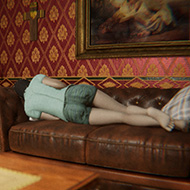
| Look | Early-2000s inspired, pixelated with modern touches |
| Related | Spin-off of September 7th |
| Platform | PC |
The core of the game is memory. You walk through a story about pain and the things people usually do not say aloud, and the writing prefers to hint instead of explain. It is a spin-off of September 7th, and the store page carries a tagline that simply asks what love is.
Loneliness. It hangs over every quiet scene, and the walking pace gives it room to settle on you.
Guilt. The story keeps circling it without ever raising its voice, which makes it harder to shrug off.
Bonds between loved ones. They are the other side of the pain, and the description frames finding someone else as inseparable from finding yourself.
Expect a psychological thriller drama rather than a scare machine. Players describe it as quiet company that stirs up old memories instead of a monster that hunts you down.
The look is built from early-2000s memories, with a pixelated edge and a few modern touches that keep it from feeling like a museum piece. That choice matters because nostalgia is part of the ache: familiar textures make the subject matter feel closer, not safer. Players who grew up around that era will pick up on small details faster than anyone else.
Sound does the heavy lifting. The soundscape pulls you further into the world, and the description insists that every detail matters and every silence speaks louder than words. A good habit is to slow down and let each quiet stretch play out, since the silence is part of the writing.
A walking simulator lives or dies on pacing, and here the walking is the pacing. Attention replaces fighting as the thing you bring to the screen, which is why headphones are worth the effort.
The average run is about 90 minutes, which suits an intimate story and makes it easy to finish in one sitting. Early in the walk the story hands you scraps, and once those scraps begin to connect the mood turns heavier. That shape rewards a single uninterrupted evening more than dipping in and out.
First-timers tend to rush, and that is the quickest way to flatten a story built on pauses. Give each room its time, listen for what changes in the soundscape, and let the walk set the speed.
Reception has been warm, with Very Positive reviews across roughly 600 reviews on Steam. Players keep singling out the story and mood as the strongest parts, and some call it a mature, emotionally direct walk that stands apart from typical indie horror.
The most common complaint is that it feels more like a demo than a full game. Some players say the visuals and mood are strong while the amount of interaction is thin, and that is a fair criticism if you want mechanics to carry the hours. Players who want puzzles or combat will likely bounce off.
Others answer that the brevity is the point, because a longer walk would dilute the ache. Atmosphere-first players tend to land in that camp, and for them ninety minutes of focused mood beats a padded campaign.
It is also not a light evening. The subject matter around guilt and loss is heavy, and the story does not rush to comfort you, so it is worth starting when you are ready for something sober.
The average is about 90 minutes, so it fits comfortably into a single evening. The pace is slow and deliberate, and rushing the walk only strips away the silences the story depends on.
It is billed as a psychological thriller drama, and players describe the discomfort as emotional rather than chase-driven. Expect heavy themes of loneliness and guilt in place of monsters, delivered through the soundscape and the slow walk.
The store page calls Pieces of me a spin-off of September 7th, but nothing in its description presents the earlier story as a requirement. Its themes of memory, guilt, and loneliness are laid out on their own, so starting here is a reasonable choice.
Pieces of me leaves its mark through quiet: ninety minutes of walking, an early-2000s look, and silences that carry the loneliness and guilt the story keeps circling. If you can accept a short, mechanics-light walking simulator, the soundscape and the question of what love is will stay with you longer than most louder games.


There are no reviews yet. Be the first one to write one.
 Optimized by Seraphinite Accelerator