
 (No Ratings Yet)
 Loading...
Fullscreen
















![Hello Kitty [HORROR]](https://gamefyno.com/wp-content/uploads/2025/03/hello-kitty-horror-1.jpg "Hello Kitty [HORROR]")
 (No Ratings Yet)Loading...
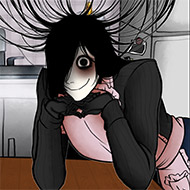
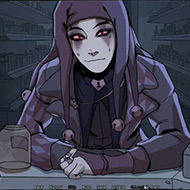
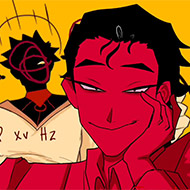
 How To Break Up With Your Yandere Boyfriend puts you in the awkward position of trying to end a relationship with someone who refuses to accept a breakup. The game is a short narrative choice experience built around dialogue, timing, and reading the mood of your yandere boyfriend before each response. Rather than relying on combat or exploration, the tension comes from choosing what to say while trying to protect your character from the consequences of a bad answer.
| Genre | Choice-based narrative |
| Core mechanic | Choose dialogue responses and manage the boyfriend’s reactions |
| Structure | Branching conversational scenes |
| Win condition | Reach a breakup outcome without triggering a worse reaction |
The central mechanic is simple: each response changes the direction of the conversation, so the safest-looking answer is not always the safest one. A yandere character is defined by obsessive attachment, which means ordinary breakup logic can fail spectacularly here. Early in the game, pay attention to how the boyfriend reacts to small changes in tone, because those reactions tell you more than a single dialogue option does. Players who normally rush through visual-novel conversations are more likely to miss these signals.
Beginners often assume that honesty automatically produces the best result. That approach can backfire when a direct statement gives the boyfriend a reason to become more possessive, while a softer response may keep the conversation under control for another scene. The game rewards players who treat dialogue as a sequence rather than judging every choice in isolation. This is also where the community term “yandere” matters: players use it to describe affection that becomes obsessive, controlling, or dangerous.
Once the boyfriend starts reacting strongly to the possibility of separation, the rhythm changes. Earlier choices establish the emotional pressure, while later choices test whether you understood those earlier reactions. The most memorable moments are often the pauses before a response and the shift in his wording rather than a dramatic visual event. That quiet change is easy to recognize once you have played through a route and know what the conversation is building toward.
How To Break Up With Your Yandere Boyfriend makes conversational pressure the main source of difficulty. There is no complicated inventory system to master, so the challenge comes from predicting which statement will calm the situation and which one will make the boyfriend cling harder. A player who enjoys analyzing dialogue trees will probably find the structure more rewarding than someone looking for fast action. A more casual player can still follow the story, but repeated attempts make the branching logic easier to read.
One useful habit is to notice when a choice changes the emotional temperature without immediately ending the scene. A response that appears harmless may quietly establish a future problem, while a seemingly uncomfortable answer can sometimes prevent a larger escalation. By the time the later conversations arrive, those small differences become much easier to recognize. The game therefore feels less like guessing and more like learning a pattern from previous attempts.
The divisive part is the intentionally uncomfortable premise. Some players enjoy the exaggerated yandere tension because it creates stakes without traditional combat, while others find the repeated emotional pressure frustrating or too dependent on trial and error. That criticism is fair, especially when a player wants a clearly signposted route instead of discovering consequences through failure. Still, the uncertainty is also what gives the dialogue its distinctive tension.
Progression is driven by conversation rather than a conventional level system, so there is no need to grind for stronger abilities or equipment. Early choices establish the relationship dynamic, and later scenes build on the emotional information revealed through those choices. If you replay a section, compare not only the final outcome but also the boyfriend’s exact reaction after each response. That is often the quickest way to understand why a route changed.
Advanced players can use a simple route-reading technique: remember the emotional trigger associated with each major exchange instead of memorizing every line. This reduces the amount of trial and error needed on another attempt. Once a recurring reaction becomes obvious, you can deliberately steer around it and test another branch. Players who like completion runs will naturally approach the game this way, treating each ending as evidence about the hidden structure of the dialogue.
A particularly useful temporal marker is the point where the boyfriend’s attachment becomes the explicit subject of the conversation. Before that moment, choices can feel like ordinary relationship dialogue; afterward, the same kind of statement carries much greater weight. The shift is subtle, which is why experienced players often describe a route as “reading the room” rather than simply picking the nicest response. That community vocabulary captures the real skill the game asks for.
Watch the boyfriend’s reactions across several dialogue choices instead of treating each answer separately. The best route depends on keeping the conversation from escalating, so choices that acknowledge the relationship without provoking possessiveness are generally more useful than blunt rejection.
Slow down and use the previous reactions as clues before selecting another response. The boyfriend’s possessive behavior is the core mechanic, so recognizing which subjects increase his attachment is more reliable than repeatedly choosing random dialogue.
The game uses earlier conversation choices to shape later reactions, so a harmless-looking sentence can matter because of the emotional context already established. Replaying the same scene while changing one response at a time makes those branching consequences much easier to identify.
How To Break Up With Your Yandere Boyfriend works best when you treat the boyfriend’s reactions as the real puzzle rather than simply searching for the fastest ending. The yandere dynamic, branching dialogue, and gradual rise in relationship pressure make each response worth reading carefully, especially when you are trying to understand why one route remains calm while another spirals out of control.


There are no reviews yet. Be the first one to write one.
 Optimized by Seraphinite Accelerator