
 (No Ratings Yet)
 Loading...
Fullscreen













![Hello Kitty [HORROR]](https://gamefyno.com/wp-content/uploads/2025/03/hello-kitty-horror-1.jpg "Hello Kitty [HORROR]")
 (No Ratings Yet)Loading...
 Tung Tung Tung Sahur does not blink, and that single detail is scarier in motion than it has any right to be. TungTung’s Nightmare takes the viral wooden figure with log-like limbs and oversized feet and drops him into a five-day escape structure that will feel familiar to anyone who’s played a haunted-house survival game before, then makes him hunt like he’s never heard of mercy.
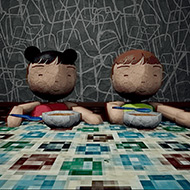
The setup is blunt: you wake up trapped inside a secluded house belonging to Tung Sahur, with no clear memory of how you got there and five in-game days to find a way out. Puzzles are scattered through the rooms, tied to keys and mechanisms you need to piece together before any exit actually opens, and TungTung’s Nightmare doesn’t slow down to explain which room matters first.
What separates this from a generic reskin is how deliberately the game leans into the character’s meme origin. Tung Sahur lumbers rather than sprints, dragging his stick along walls and floors as he moves, and that dragging sound becomes the single most important audio cue in the entire game once you’ve died to him a couple of times.
Tung Sahur wields a punishing stick that ends a run the moment he catches you in the open, and his patrol logic rewards players who track sound over sight. Because his stare never breaks and his footsteps never quite stop, a lot of first-time players freeze up trying to visually track him across rooms instead of just listening for the drag of that stick against wood.
Distraction items scattered through the house let you redirect his attention the same way earlier hiding-and-escaping games use thrown objects or noise makers, and learning which distractions actually pull him away from a doorway you need, rather than just delaying him for a second, is most of the early learning curve.
Closets, cabinets, and gaps under furniture all function as hiding spots, but TungTung’s Nightmare punishes players who treat hiding as a permanent solution rather than a pause button. Staying still buys time to plan the next move; it doesn’t make progress toward the door on its own, and players who camp in a single hiding spot too long usually run out of in-game days before finishing the puzzle chain.
Part of what players discuss most about TungTung’s Nightmare is how a character born entirely from short-form video clips holds up as an actual antagonist once he’s given patrol logic and a kill radius. The unblinking stare that made the original clips unsettling translates surprisingly well into a horror mechanic, since you’re never quite sure, mid-chase, whether he’s actually looking at you or just facing your direction by coincidence.
TungTung’s Nightmare works because it takes a joke everyone has already seen a hundred times and refuses to let you laugh once his stick is close enough to hear. Five days, one dragging stick, and a stare that never blinks turn out to be plenty.

There are no reviews yet. Be the first one to write one.
 Optimized by Seraphinite Accelerator