 (1 votes, average: 5.00 out of 5)
 Loading...
Fullscreen
















![Hello Kitty [HORROR]](https://gamefyno.com/wp-content/uploads/2025/03/hello-kitty-horror-1.jpg "Hello Kitty [HORROR]")
 (1 votes, average: 5.00 out of 5)Loading...
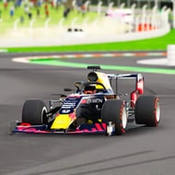
 What’s the actual difference between finishing mid-pack and taking pole position in Super Star Car? It usually isn’t top speed — it’s how cleanly you carry momentum through the tightest corner on the track without tapping the brakes too hard or too late.
| Genre | Racing |
| Core Mechanic | Precision cornering and career-mode upgrades |
| Objective | Win races, earn stars, and climb the career ladder |
| Controls | Arrow keys or WASD to steer, accelerate, and brake |
The career ladder is where most of the game’s actual content lives. Every race completed earns stars and money, and both feed directly into unlocking new opportunities further up the ladder rather than just padding a score screen. There’s no nitrous, no catch-up assist nudging weaker cars forward, and no DRS-style shortcut — every position gained on track has to come from actual driving.
That absence of assists is deliberate, and it’s also the thing new players notice first, usually the hard way, when a corner they expected to coast through instead sends them spinning into the barrier.
Each track in Super Star Car has its own personality once you’ve run it a few times. Arcport Circuit rewards late braking into its tightest chicane, Yafield Park punishes drivers who carry too much speed into its long sweeping bends, and Riverside Circuit is less about any single corner and more about maintaining a consistent rhythm across a layout with almost no straight sections to recover on.
Players who treat every track the same way — braking at the same distance regardless of corner shape — tend to plateau at mid-table finishes. The ones climbing the leaderboard usually mention adjusting braking points per track rather than relying on one universal habit.
Steady steering input matters more than aggressive corrections here. Oversteering into a turn tends to snap the car wide rather than tighten the line, and once you’re off the track surface entirely, the fastest recovery is hitting the reset key rather than fighting to steer back on manually, which usually costs more time than the reset itself.
A minimap in the corner of the screen shows upcoming turns before they’re visible on the main view, and a speedometer nearby helps gauge whether current speed is manageable for what’s coming. Ignoring both and driving purely on reaction tends to work until the track gets technical, at which point the lack of advance warning starts costing positions.
Money earned from races goes toward upgrading car performance, and it’s tempting to sink everything into the first upgrade available. Players who progress more efficiently tend to spread upgrades across the categories that matter most for whichever track type is coming up next in the career ladder, rather than maxing out one area early and leaving the car unbalanced against a track it’s poorly suited for.
The most common complaint in player discussion is the aggressiveness of the AI opponents, especially near the front of the pack. Rivals don’t hold back from contact, and getting rammed while attempting a clean overtake is common enough that it’s the single most argued-about aspect of the game — some players see it as adding genuine tension, others see it as an unfair obstacle layered on top of already unforgiving physics.
What’s rarely disputed, though, is that the corner-heavy track design is the game’s strongest feature. Even players frustrated by aggressive rivals tend to agree that tracks like Riverside Circuit are built around genuinely satisfying cornering rather than just testing straight-line speed.
Adjust braking points per track rather than applying one fixed habit everywhere, since Arcport Circuit, Yafield Park, and Riverside Circuit each demand different braking distances based on corner shape.
Oversteering input is the usual cause — steady, smaller steering corrections hold the racing line better than sharp last-second adjustments, especially heading into tighter chicanes.
Resetting is almost always faster, since manually steering back onto the track surface after going wide typically costs more time than the reset itself.
Super Star Car rewards patience over raw aggression, and the moment a clean lap through Riverside Circuit finally comes together, brakes released at exactly the right point through every corner, is the kind of run that makes climbing the career ladder feel earned rather than handed over.


There are no reviews yet. Be the first one to write one.
 Optimized by Seraphinite Accelerator