 (1 votes, average: 5.00 out of 5)
 Loading...
Fullscreen










![Hello Kitty [HORROR]](https://gamefyno.com/wp-content/uploads/2025/03/hello-kitty-horror-1.jpg "Hello Kitty [HORROR]")
 (1 votes, average: 5.00 out of 5)Loading...
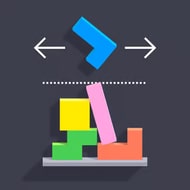
 Is Stacktris just Tetris with a wobble, or does it ask something different from you? Once the first tetromino starts spinning above the table, the answer becomes clear: nothing locks into place, nothing clears, and a single block that slides off the edge ends your run. The game borrows its shapes from the block-puzzle classic and swaps the neat grid for physics, so every piece you drop has to stay exactly where you put it.
| Genre | Physics-based tower stacking |
| Goal | Build the tallest tower of tetrominoes |
| Core action | Stop the spin, drag, release |
| Lose condition | One block falling off the table |
| Upgrades | Seven, bought with coins |
Each turn starts with a tetromino spinning above the table. On desktop you click and hold to stop the rotation, drag to slide the piece into position, and release to drop it, while the A and D keys or the arrow keys handle fine horizontal moves. On a phone you long-press, drag sideways, and let go. The sequence is simple, which makes the timing of that first click the entire skill.
The catch is that the spin speeds up the longer you wait. Players who hesitate end up wrestling a blur, and the tetromino stops at whatever angle the rotation happened to reach. Stopping early and accepting a slightly awkward shape is nearly always better than chasing the perfect angle.
Early in a run this feels forgiving, because the tower is low and the table gives you plenty of room. Tetris veterans usually adapt quickly, but they carry one habit that hurts them here: trying to fill gaps. In this game a gap is fine, while a wobble is not.
Because the pieces obey physics, the shape you drop matters less than the surface you leave behind. A flat, even top gives the next tetromino something to grip, while a jagged top turns the next drop into a coin flip. Long pieces laid across the stack spread weight, whereas pieces stood upright create the tall, narrow towers that fall first.
A tower rarely falls at the moment you drop the losing piece. It falls several pieces later, after an earlier uneven placement quietly builds up a lean. That is why so many runs seem to end suddenly, when the real mistake happened well before the collapse.
Sliding is the other killer. A piece that lands on a slick surface keeps moving after impact, and a piece that bounces can hop off the edge entirely. That is where the upgrades come in, and they change how careful you can afford to be.
There are seven upgrades, and they split into two families: ones that steady the tower and ones that feed your coin supply. Slow Spin lowers how fast the tetromino starts rotating, although the rotation still climbs back toward its maximum if you wait, so it buys time rather than removing the pressure. High Friction reduces how far a landed piece slides, which makes it an easy first pick because it targets the most common way towers collapse.
Low Bounce takes the springiness out of impacts, so a piece that lands slightly hot is less likely to rebound over the edge. Wide Table gives you a larger platform, which is the most direct way to buy yourself room. Next Block shows what is coming, and that preview is what lets you plan a surface instead of reacting to one.
Coin Magnet makes coins easier to collect and Coin Chance raises how often they appear, so both feed the upgrade loop instead of helping the tower directly. They feel less exciting than the stability upgrades, but a player who picks them early tends to afford everything else sooner.
Coins collected during a run are the currency for upgrades, and the game also lets you watch hints, which is a good use of a bad run when you are stuck. The loop nudges you to keep going, and a longer run always pays more than several short ones.
Once Next Block is unlocked, the pacing of a run changes. You stop reacting to each piece and start thinking one drop ahead, choosing which flat edge to leave open for the shape you know is coming. Players chasing a high score often reach this mindset soon after their first upgrade purchases.
Casual players will find that short attempts fit neatly into a break, and the coin loop makes even a poor run feel useful. Perfectionists chasing height records may find that same loop a bit slow, because upgrading takes several runs before the tower starts to behave differently.
The game is upfront about being harsh: one fallen block ends the run, no matter how tall the tower has grown. That is what gives every drop weight, and it is also what makes a long run vanish because of a single bounce.
Two complaints tend to come up. Tetris fans expect line clears and find none, and some players feel the physics occasionally decides a run by itself, with a piece rocking off the edge despite a careful placement. Both criticisms have some truth, because this is a balance test wearing a block-puzzle costume rather than a puzzle about efficiency.
The advice most veterans give is to slow down. Nudge with the keyboard, stop the spin early, and treat the table as a shrinking resource instead of a floor. The runs that end with a new record are rarely the flashiest ones.
Stacktris asks for calm hands more than fast ones: stop the spin early, keep the top of the tower flat, and let High Friction and Wide Table do the work your reflexes cannot. The tetrominoes may be borrowed from the block-puzzle classic, but the tower you leave standing is entirely your own.
There are no reviews yet. Be the first one to write one.
 Optimized by Seraphinite Accelerator