
 (1 votes, average: 5.00 out of 5)
 Loading...
Fullscreen














![Hello Kitty [HORROR]](https://gamefyno.com/wp-content/uploads/2025/03/hello-kitty-horror-1.jpg "Hello Kitty [HORROR]")
 (1 votes, average: 5.00 out of 5)Loading...
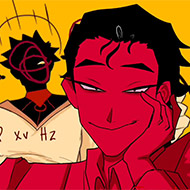
 Channel 453 looks like a gothic romance visual novel and functions as a psychological horror game where the screen between you and Liotte is treated as thinner than it should be. You move into a new home, turn on the television, and find him already there — watching, waiting, speaking directly to you as though he has been waiting across an unspecified number of repeated days for you to arrive. The kindness he presents first is not the version of him you will finish the game knowing.
| Genre | Psychological horror otome / visual novel |
| Platforms | Windows, macOS, Linux |
| Playtime | 60–90 minutes (full remake) |
| Endings | 3 |
| Status | Remake (Curtain Call) in development; original jam version on itch.io |
Liotte’s behavior in Channel 453 is rooted in a time loop that the game does not explain directly. The static that cuts across the television screen, the moments when his composure breaks without warning, and the objects you find in the backstage sequences that suggest surveillance predating your arrival — all of these are pieces of a history the game withholds until you have enough trust in Liotte to be disturbed by what that history reveals. He is not simply waiting. He has been waiting through iterations, and the loop has done something to him that the game’s earlier scenes are careful to conceal.
Ivan appears in the backstage investigation sequence as a figure whose relationship to the loop remains partially unclear in the original version. Players in the community have built detailed readings of him as a god-like administrator of the nevi — the term the game introduces for its supernatural mechanics — who set the loop’s conditions and has his own interest in how it resolves. That reading is consistent with the game’s text but not confirmed by it, and the Curtain Call remake is expected to make his role more legible. The divide between players who find the ambiguity productive and those who find it frustrating is the most consistent point of debate the game generates.
Channel 453 has three endings, and the choices that lead to each are not labelled. The game does not present obvious branch points in the way most visual novels do. Instead, the specific responses you give Liotte during his moments of instability — when he becomes angry, when he asks questions that feel like tests — accumulate into an outcome. Players on first playthroughs who tried to be consistently kind to Liotte did not always reach the ending they expected, which is the game communicating something about what kindness means when the person receiving it is operating from a loop-induced obsession.
The meta-narrative layer — Liotte directly acknowledging the player’s existence rather than addressing a named character — is the element that initially attracted the community that formed around the original jam release. That fourth-wall pressure, the sense that Liotte on the screen is speaking to you specifically rather than to a fictional proxy, gives the horror its texture. It also makes the game harder to discuss without spoiling, because the most specific things players want to share about it are the moments when that acknowledgment stops feeling like a stylistic choice and starts feeling like something else.
Channel 453 has three endings determined by how you respond to Liotte’s emotional demands across the visual novel’s duration. There are no clearly flagged choice points. Responses that seem supportive in early scenes have different weight by the time the loop mechanics become legible. The community’s consensus is that a first playthrough should be played intuitively, and that the ending you receive on that basis tells you something worth knowing before attempting the others.
The backstage is an investigation section that gives access to objects and documents tied to Liotte’s history before the loop. Items found there — records of observation, objects suggesting prolonged attention to the player character before any in-game meeting — are the primary source for player theories about Liotte’s intentions and about Ivan’s role in the loop’s construction. It is the section the game’s more analysis-focused community returns to most when building their interpretations.
Channel 453 rewards patience with ambiguity and an appetite for horror that arrives through behavior rather than event. Liotte’s Victorian silhouette on the television static, the specific cadence of his apologies after moments of anger, and the backstage’s quiet accumulation of what he has been doing between loops — these are the details that stay after the credits. The remake under the Curtain Call title is building toward a more complete version of that story, but what already exists in Channel 453 is specific enough to earn the community it found.


There are no reviews yet. Be the first one to write one.
 Optimized by Seraphinite Accelerator