
 (1 votes, average: 5.00 out of 5)
 Loading...
Fullscreen















![Hello Kitty [HORROR]](https://gamefyno.com/wp-content/uploads/2025/03/hello-kitty-horror-1.jpg "Hello Kitty [HORROR]")
 (1 votes, average: 5.00 out of 5)Loading...
 Snowed Under looks like a chore simulator dressed up in snow — shovel, drift, repeat — but it plays like something patiently waiting for you to stop paying attention. The mundane premise is the trap.
The opening stretch of Snowed Under commits hard to the bit: you’re clearing snow, nothing more, working toward a steel tower that sits on the horizon like a landmark rather than a threat. It’s slow by design, and the first thing most people say after finishing is that the pacing either won this game its fans or lost it its critics — there isn’t much middle ground in how players talk about the opening hour.
What makes it work, when it works, is restraint. The game never rushes you toward the horror it’s clearly building. Instead it lets small wrongness accumulate — a boot in the wrong drift, a building where the map suggested open ground — until the mundane task of shoveling starts to feel like the only stable thing left.
Players used to faster horror pacing tend to get impatient here, and that impatience is one of the most consistent criticisms in community discussions of Snowed Under. Completionist-minded players, by contrast, often report the opposite reaction: the slow accumulation of small details rewards the habit of checking every drift rather than beelining for the tower, and that patience tends to pay off once the buried structures start appearing.
There’s also a practical reason the pacing matters beyond mood. The game is teaching you its own rhythm during this stretch — how far a full swing clears, how quickly stamina drains on packed versus loose snow — and players who skim through the first twenty minutes without absorbing that rhythm end up fighting the controls later, right when the game actually needs them to be second nature.
One thing beginners consistently miss: the terrain itself is communicating. Denser, uneven drifts tend to sit over buried structures rather than open ground, and once you start noticing the visual difference, digging stops being random and starts being closer to prospecting. Players who treat every patch of snow identically waste stamina on empty ground and end up backtracking constantly.
Scrap materials are the resource tying this together — found while digging, spent on upgrades to your shovel’s strength, your stamina, and how much you can carry before you need to stop and craft. Early game, strength upgrades feel rewarding because they visibly speed up each swing; by the midgame, stamina is what actually determines how deep into a session you can push before the drifts near the tower force a retreat.
Exploration-focused players tend to gravitate toward carry capacity first, since it lets them clear a wider radius before having to return and craft, while players chasing the story push stamina hard so they can reach buried structures in fewer, longer sessions. Neither choice is objectively better — Snowed Under doesn’t punish either approach directly — but the two builds change how the game actually feels to play, and forum threads about “optimal” upgrade order tend to split along exactly this line.
By the time you’ve upgraded stamina twice, the difference is noticeable in a way the game never spells out in a tutorial: you can push through the denser snow near the train yard in one continuous dig instead of three separate approaches, and that continuity changes how the buried structures land narratively, since you uncover more of a scene at once instead of piecing it together across return trips.
Kai is with you for the whole descent, and Kai’s dialogue is doing more narrative work than the environment for most of the game’s runtime. Early on it reads as simple companionship — small talk to fill the quiet of digging. Once you’re past the abandoned train yard and gas station sections, Kai’s responses shorten, and the tone of the conversation curdles in a way the game never explains directly.
That ambiguity is genuinely divisive. Some players find the lack of explanation the most effective horror choice in the whole game; others wanted at least one direct confrontation with what’s actually happening to Kai, and feel the ending doesn’t fully earn its restraint. Both positions show up constantly whenever Snowed Under comes up in discussion.
What tends to get overlooked in that debate is how deliberately the dialogue is paced against your digging speed rather than against fixed story triggers. Kai speaks less the longer you go without finding anything new, which means a player who digs efficiently hears a noticeably different, more talkative Kai than a player who wanders and second-guesses every drift. That’s a detail almost nobody catches on a first playthrough, and it’s one of the more interesting bits of design once you notice it.
Lore-focused players who dig back through every optional structure tend to piece together the most complete picture of what’s happening to Kai, simply because there’s more dialogue triggered by proximity to specific buried rooms than the main path alone provides.
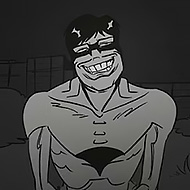
There’s a specific beat late in the game — a humanoid figure glimpsed on all fours, grinning, at the edge of your light — that players consistently cite as the point where Snowed Under stops being a quiet exploration game and becomes something else entirely. It’s brief, it’s not explained, and it’s the single most talked-about image from the whole runtime.
By the time you’re close enough to the tower to see it clearly, the game has fully abandoned the pretense that this was ever just a job.
What makes that sighting land is everything that precedes it. Because the first hour trains you to expect nothing but snow and the occasional structure, the game earns a genuine jolt out of a single silhouette rather than needing a jump scare or a chase sequence to sell the shift. Players who came in expecting a more traditional horror escalation — patrolling threats, chase mechanics, a body count — are often surprised that this one beat is doing most of the heavy lifting, and reactions to that restraint split the community almost exactly the way the Kai subplot does.
It’s worth being honest that Snowed Under isn’t a runaway critical darling — user reviews sit at roughly 57% positive across just over a hundred ratings, and the split tracks almost exactly with pacing tolerance. Two to four hours is short enough that a slow opening can sour an entire playthrough for players expecting momentum from minute one, while players who came in for mood over pace tend to rate it far higher.
That divide is worth going in with eyes open, because it shapes how the whole experience reads far more than any single plot twist does.
The most common negative comments center less on the ending and more on the middle stretch, once the novelty of digging has worn off but before the buried structures start appearing regularly enough to keep momentum going. Players who push through that lull tend to come out defending the game strongly afterward, which is part of why community sentiment around Snowed Under often reads as more polarized in early impressions than in reviews written after a full playthrough.
What Snowed Under leaves you with isn’t really the steel tower, which turns out to be more of a destination than a payoff — it’s Kai’s voice thinning out over hours of digging, and the specific, unshakable image of something grinning back at you from the edge of the dark.

There are no reviews yet. Be the first one to write one.
 Optimized by Seraphinite Accelerator