
 (No Ratings Yet)
 Loading...
Fullscreen






 (No Ratings Yet)Loading...
What happens when one bad roll costs you an entire run? In Slice & Dice you lose a single fight and you start over, which means every roll is a decision about risk long before you spend it. The game puts five heroes in front of you, gives each of them their own dice, and asks you to fight through 20 levels of monsters to reach a final boss.
| Genre | Tactical dice battle roguelike |
| Party | 5 heroes, each with their own dice |
| Run length | 20 levels ending in a final boss |
| Hero classes | 128 |
| Monster types and items | 73 monster types and 473 items |
| Difficulty | 7 levels, from Heaven to Hell |
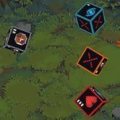
Your party is five heroes, and each hero is represented by a die with its own faces. The faces are your actions: some deal damage, some shield, some heal, and some do stranger things that depend on the class. Because every action comes from a roll, the question each turn is not what you want to do but what the dice allow you to do.
That reframing is the whole game. Newcomers often struggle with it for the first few runs.
Early on you pick from simple starting heroes, and you learn quickly which faces matter. A die with several damage faces is a safe bet, while one with a single powerful face is a gamble worth taking only when you have a way to reroll. Players who like puzzles more than random chance will enjoy this layer most.
Combat is turn-based, and the monsters roll first. After they decide what to do, you see what is coming, which is a rare luxury in a dice game. You then roll your own dice and choose how to spend each result: who attacks, who defends, who heals, and when to hold back.
Rerolling is the safety valve. You can reroll before committing, and you can undo actions, so luck can be bent without being removed. Players who understand this stop treating a bad roll as a failure and start treating it as a puzzle.
A good habit is to think two turns ahead. If the monsters roll something heavy, use your safer faces now and save the powerful ones for the moment you can kill something outright. Veterans use that planning to turn bad luck into steady progress.
Each time you win a fight you are offered rewards: an item or a hero upgrade. Items change the faces of your dice, upgrading them or replacing them outright, while hero upgrades push a hero into a new class along a tree of choices. With 128 hero classes, 73 monster types and 473 items, no two runs look alike for long.
The depth is in synergies. One combination can turn a die into a machine: a face that deals heavy damage to several targets, plus a spell that refreshes it, can chain through a whole fight in a single turn. Players talk constantly about synergies, and the best runs are the ones where the party works as one unit rather than five separate heroes.
Curses act as the counterweight, a pile of negative modifiers that can twist a run, and the game offers an endless supply of them for players who want extra pressure. Anyone who enjoys theorycrafting will find plenty to chew on.
The game has seven difficulty levels that run from Heaven to Hell. Heaven is a gentle entry for learning the dice, and Hell tests whether your party can survive ruthless monsters. Raising the difficulty changes how risky each fight is more than it changes the basic rules.
Custom modes add variety, and some must be unlocked. In Raid mode you control 10 heroes but have to beat twice as many enemies, which changes the pace entirely and rewards players who like managing a crowd. This is where completionists spend their time after the final boss falls.
By the time you reach the later levels of a Hell run, one wrong decision at the start of a fight can unravel everything. That is the draw for hardcore players, and the reason newcomers should start lower.
After 20 levels you meet a final boss. The Hand is a potential final boss with especially strong attacks, but his Handicap passive gives a boost to all your heroes’ dice, which keeps the fight from feeling unwinnable.
The biggest debate is luck. Some players feel a bad run is simply a bad run, while others point to rerolls, undo and careful planning as proof that skill decides most outcomes. Both are true to a degree: a lost run teaches you something, but a perfect plan can still fall to an unlucky string of rolls.
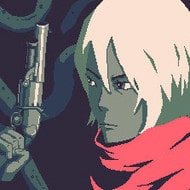
Presentation is the other talking point. The pixel art is charming and sparse, and early impressions noted limited sound and animation. Players who want a lavish production may be disappointed, while those who prefer clean readability tend to praise it. With a single loss ending a run, expect frustration before mastery.
Three questions come up for players learning the rules.
Slice & Dice rewards the player who reads the monsters’ roll first, spends rerolls wisely, and forms a party where five dice and a handful of items work together. Start on Heaven, learn what the Hand’s Handicap does for your heroes, and push toward Hell once the synergies start to click.

There are no reviews yet. Be the first one to write one.
 Optimized by Seraphinite Accelerator