

 (No Ratings Yet)
 Loading...
Fullscreen














 (No Ratings Yet)Loading...
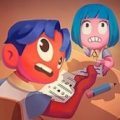
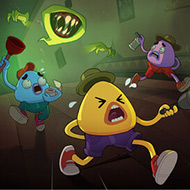
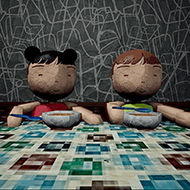
Gear Up Einstein! looks like a loud history-class costume party, but it plays like a tight puzzle about hex positioning, item synergies and deciding which single agent becomes your carry. You recruit figures such as Einstein, Queen Elizabeth and Galileo through a time machine, load them with gear, and then watch the fight resolve on its own once the squad is placed. The pressure comes from everything that happens before the first swing, because a weak setup cannot be repaired mid-fight. The game works solo or with up to three players, and the structure stays the same either way.
| Genre | Tactical roguelite auto-battler |
| Players | 1–3 (solo or co-op) |
| Setting | Time travel through historical eras |
| Playable characters | 29 agents |
| Items | 100+ |
| Enemies | 35 |
| Difficulty levels | 5 |
Every mission opens with a preparation phase on a hex grid, and nothing happens until you press Ready. Placement decides what follows, because the battle plays out automatically and your squad fights where you left it. Galileo is the cleanest example: his Range is doubled, and he gains roughly ten percent Speed for every hex between him and his target, so parking him at the back is the point of the character rather than a cautious habit. Frontliners absorb damage while supports and ranged agents stay out of reach for as long as the formation holds.
Beginners tend to place agents by habit instead of by the mission in front of them. A formation that worked in Ancient Egypt can fall apart against the combat modifiers of the next era.
Modifiers such as Plague and Scorching Sun add Poison or Burning to a fight, and some missions change what winning even means. In Protect the Contraband you earn gold for every barrel that survives, and in Stop the Sacrifices you are paid for each captive you save, so clearing the board as fast as possible is not always the best plan. After a loss, the combat report breaks down damage sources, summons, overkill and healing, and that report is where most players work out why a formation failed.
The roster currently holds 29 playable characters, called agents at HQ, from Einstein and Queen Elizabeth to Galileo, Tesla, Mozart, Genghis Khan and Nero. Each agent brings personal perks, and 48 squad perks sit on top of them, which is why two squads of the same size can play nothing alike. Reading those perks against each other is the real recruitment skill, and it matters more than picking the most famous name.
Traits explain what an agent is for. Royalty pays out gold after a short delay, Scientist boosts stats, Martyr leans on healing, and Artist builds Mastery. Beginners often recruit by fame rather than function and end up with a squad that has no plan.
Newcomers can switch on the Character Guide, which gives hints during a mission and suggests starting items for the agent you are using. Completionists have a longer road, since some agents stay classified until you earn enough experience back at HQ. Unlocking the full roster takes many runs, and that slow drip is a large part of the long-term pull.
More than a hundred items are available, from weapons like the Chainsaw, Flintlock Firearm, Tommy Gun and Bazooka to utility pieces that change how an agent behaves. Each item carries a Gear Ability whose strength grows with its level. You raise that level by evolving the item at an Anvil, up to level 5, and the Codex records the highest level you have reached. A few examples show how different the effects can be:
Spreading gear evenly across the squad feels fair, and it wins less often than commitment.
The deeper tricks are quieter. Nanobot Jelly turns into random Gadgets that fill every empty Tool slot before combat, the Grappling Hook can grab charmed enemies, and the Pitz Ball shows its landing hex during preparation so you can aim its bounces. Min-maxers who read item tooltips closely will find combinations the game never explains, and those finds are what make a run feel authored by you.
The time machine takes your squad through Ancient Egypt, the Italian Renaissance, a Maya setting and New York, among other stops. Each era has its own roster of enemies, with names like Jaguar Warrior, Sea Mage and Angry Turkey, and its own combat modifiers. Every run points toward a final showdown against monstrous invaders, so the early eras are about building the strength you will need there.
Crossroads break up the march. A run gives you five forks, and each one leads to an event from that era, such as the Pyramid or Tomb Raiding crossroads. Some hand out quick loot, while others change your next fight, which suits roguelite fans who like a decision with a real cost attached.
Divergence is the system that keeps the timeline unstable. After each mission the divergence level rises, and higher levels raise the chance of items and enemies from other eras showing up, each marked by a purple effect. Combat difficulty stays the same, although divergent elements are slightly stronger than what you normally meet. The purple shimmer on an item from the wrong century is the moment a run stops feeling like a template and starts feeling like yours.
Co-op supports up to three players who trade equipment, tune each other’s builds and combine abilities against escalating enemies. Friends who like to coordinate will enjoy handing a weapon across the table to whoever can make it work best. Balance passes have eased the opening era and Italy for groups of two or three, and a Spectator Mode exists for anyone waiting for the next run.
The honest debate is about carries. Reviewers describe a dominant approach in which one damage dealer gets the best gear while everyone else takes whatever tanking pieces remain, and they say it works even on the hardest difficulty. Stun is the usual counter, so the strongest builds are often the ones that find a way to ignore it. Exponential builds have also dominated the leaderboard, which some players find less interesting than the tactical fights themselves, and a few reviewers feel the solo content runs thin after about ten hours.
None of that erases what works well. Endless mode gives high-score chasers a reason to keep experimenting, and the arguments about balance are mostly arguments about how good the system already is.
Everything in the game can be played solo, from HQ upgrades and Crossroads to the final invasion. Co-op adds equipment trading and shared builds, but nothing is locked behind a group. If you want a safety net, switch on the Character Guide for in-mission hints and starting item suggestions.
Each mission raises the timeline divergence, and higher levels bring more items and enemies from other eras, marked with a purple effect. Combat difficulty itself stays the same, though divergent elements are slightly stronger than usual. Treat it as a source of variety and a few surprise power spikes rather than a penalty.
Evolve it at an Anvil, which raises its level up to 5 and scales its Gear Ability. Pair it with items that feed the same agent, so the Chainsaw’s damage and healing land on a carry who can survive Stun. The Codex tracks the highest level you have reached, which helps when you are chasing mastery.
Gear Up Einstein! pays off for players who read the purple shimmer of Divergence, park Galileo at the back of the grid and spend their gold at the Anvil instead of on one more gadget. Queen Elizabeth’s burst of Speed, a well-fed Chainsaw and a squad that survives to the final invasion all come from the same habit: decide the formation before the first swing, then let the fight prove you right.


There are no reviews yet. Be the first one to write one.
 Optimized by Seraphinite Accelerator